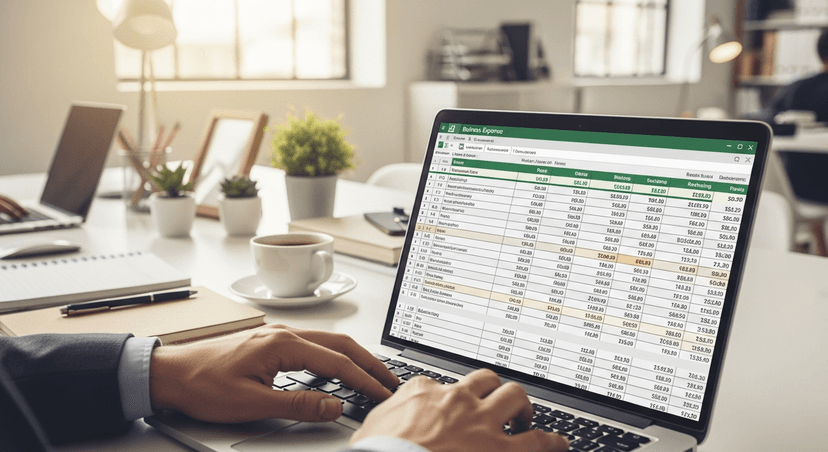
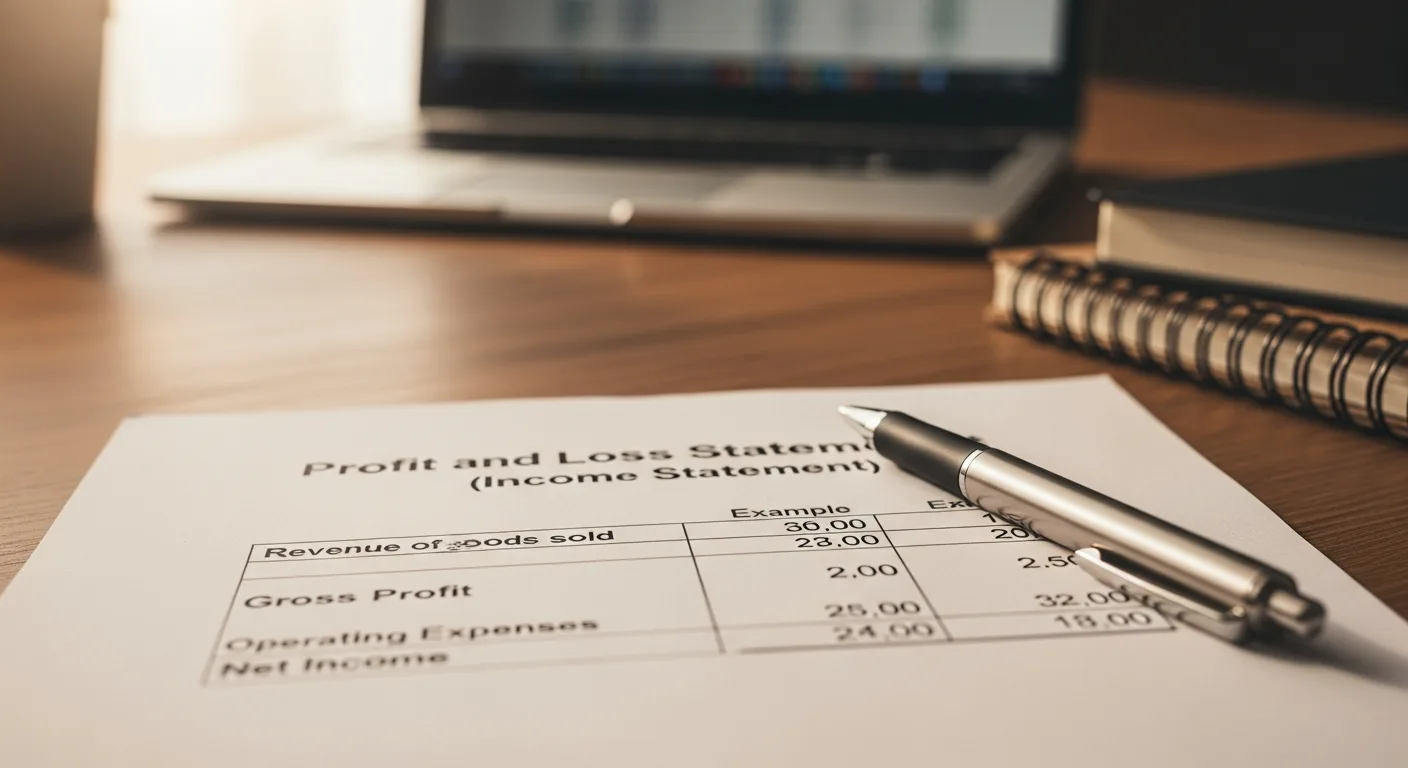
Profit and Loss Statement Template: Free Download with Examples
Your P&L tells you one thing: is your business making money or burning it? Revenue minus expenses. Positive means profit, negative means trouble. That's the entire concept.
Most business owners avoid building one until a bank or investor asks for it. Then they scramble to recreate months of data from memory. Don't be that person.
Download the free P&L template — includes a 12-month tracker with auto-calculated totals, a filled-out coffee shop example, and instructions. Plug in your numbers and the formulas do the rest.

What Goes in a Profit and Loss Statement
Every P&L follows the same structure, top to bottom:
Revenue — everything your business earns. Gross sales minus returns, refunds, and discounts gives you net revenue. If you run multiple revenue streams, break them out separately so you can see which ones actually perform.
Cost of Goods Sold (COGS) — costs directly tied to making your product. Raw materials, manufacturing, direct labor, shipping. Rent and marketing don't belong here. Revenue minus COGS gives you gross profit, which tells you how much you keep from each sale before overhead.
Operating Expenses — everything that keeps the business running but doesn't directly create your product. Rent, salaries, utilities, insurance, marketing, software. This is where most businesses bleed money without realizing it.
Net Profit — gross profit minus operating expenses, plus or minus any interest or other income. This is your bottom line. The average small business profit margin sits between 7% and 10%. If you're consistently below that, something needs to change.
Quick Example: Coffee Shop P&L
The template includes a full example, but here's the summary:
| Line Item | Monthly | % of Revenue |
|---|---|---|
| Net Revenue | $25,500 | 100% |
| COGS (beans, food, packaging) | $7,660 | 30% |
| Gross Profit | $17,840 | 70% |
| Operating Expenses (rent, staff, utilities) | $13,700 | 54% |
| Net Profit | $4,140 | 16.2% |
A 70% gross margin is strong. The 16.2% net margin beats the small business average. You want your P&L to tell a story like this: clear revenue, controlled COGS, and operating expenses that don't eat your gross profit.
Mistakes That Make Your P&L Useless
Mixing personal and business expenses. That lunch "while working" doesn't count unless you can document a business purpose. Open a separate business bank account if you haven't already.
Recording expenses when you pay, not when you incur them. You ordered $2,000 of inventory in March but paid in April. It goes on March's P&L. This is accrual accounting, and it gives you an accurate picture of each month's actual performance.
Dumping everything into "Miscellaneous." If 15% of your expenses are miscellaneous, you don't actually know where your money goes. Create specific categories and stick to them month after month.
Recording equipment as a one-time expense. A $3,000 laptop should be spread over its useful life through depreciation, not dumped into one month's expenses. One bad month distorts your trends.
How to Actually Use Your P&L
Building the statement is step one. Using it is where the value comes in.
Compare month over month. Profit margin dropping? Figure out if revenue fell or expenses crept up. Catching a trend in month two is fixable. Catching it in month eight is expensive.
Track expense ratios, not just dollar amounts. $500 on marketing makes sense at $10,000 revenue. At $2,000 revenue, that's 25% of your income going to marketing. Percentages expose problems that raw numbers hide.
Use it for projections. Your P&L history feeds directly into pro forma financial statements and cash flow projections. Investors and lenders want to see both historical performance and forward-looking numbers.

Related Guides
-
Business Proposal Template: Free Examples & How to Write One — The complete guide for this topic
-
Marketing Plan Template: Free Download with Examples — The complete guide for this topic
-
Income Statement Template: Free Excel Download with Examples — The complete guide for this topic
-
Pro Forma Financial Statements — Project future P&L performance for investors
-
Cash Flow Projections — Revenue doesn't equal cash in the bank
-
Business Plan for Bank Loans — Banks want your P&L as part of the application
-
How to Write a Business Plan — Where financial statements fit in the full plan
Build Your Complete Financial Picture
A P&L handles your income and expenses. But lenders and investors expect cash flow statements, balance sheets, and 5-year projections too. PlanArmory's financial projections tool generates all of these from your business model in about 10 minutes.
If you haven't grabbed the template yet, download it here.