Financial Projections Template: Free Excel Download with Examples
Building financial projections from scratch feels like trying to solve a puzzle with half the pieces missing. You know investors expect solid numbers, but staring at a blank spreadsheet won't make revenue forecasts magically appear.
Skip the guesswork. A proven template gives you the framework to build credible projections that actually make sense to lenders and investors.
What Are Financial Projections?
Financial projections forecast your business's future financial performance over time. They're educated guesses about revenue, expenses, cash flow, and profitability based on market research, historical data, and realistic assumptions.
Think of them as your business's financial GPS. You wouldn't drive cross-country without directions, and you shouldn't run a business without knowing where your money's going.
Most financial projections cover monthly periods for the first year, quarterly for the second year, and annual projections for years three to five. This structure gives investors the detail they need for near-term planning while showing your long-term vision.

Why Financial Projections Matter
You can't wing this part. Solid projections aren't just nice-to-have documents that sit in a folder somewhere.
Businesses with formal plans grow 30% faster than those without. Companies with business plans are 2.5x more likely to secure loans. Around 70% of venture capitalists admit they never invest in a startup without first reviewing its business plan, with 75% of investors prioritizing financial projections specifically.
Your projections serve multiple purposes. They help you spot potential cash flow problems before they happen. They show investors you understand your market and have realistic expectations. They force you to think through every aspect of your business model.
Banks need them for loan approvals. Investors use them to evaluate risk and potential returns. You need them to make smart decisions about hiring, inventory, and growth investments.
Essential Components of Financial Projections
Don't overthink this. Every financial projection needs five core statements that work together to tell your business's financial story.
Income Statement (Profit & Loss) This shows your projected revenue, expenses, and profit over time. Start with realistic revenue assumptions based on market research, not wishful thinking. Factor in all operating expenses including salaries, rent, marketing, and other costs. Remember to add 25-35% on top of base salaries for benefits and payroll taxes when budgeting for staff.
Cash Flow Statement Cash flow tracks when money actually moves in and out of your business. Revenue doesn't equal cash in the bank if customers pay you 60 days later. This statement shows whether you'll have enough cash to operate month by month.
Balance Sheet Your balance sheet shows assets, liabilities, and equity at specific points in time. It's a snapshot of what you own versus what you owe.
Break-Even Analysis This calculates when your revenue will cover all your expenses. It's often the first question investors ask because it shows how long they'll need to fund losses.
Assumptions Documentation List every assumption behind your numbers. How did you calculate customer acquisition costs? What's your pricing strategy? Document everything so others can understand your logic.
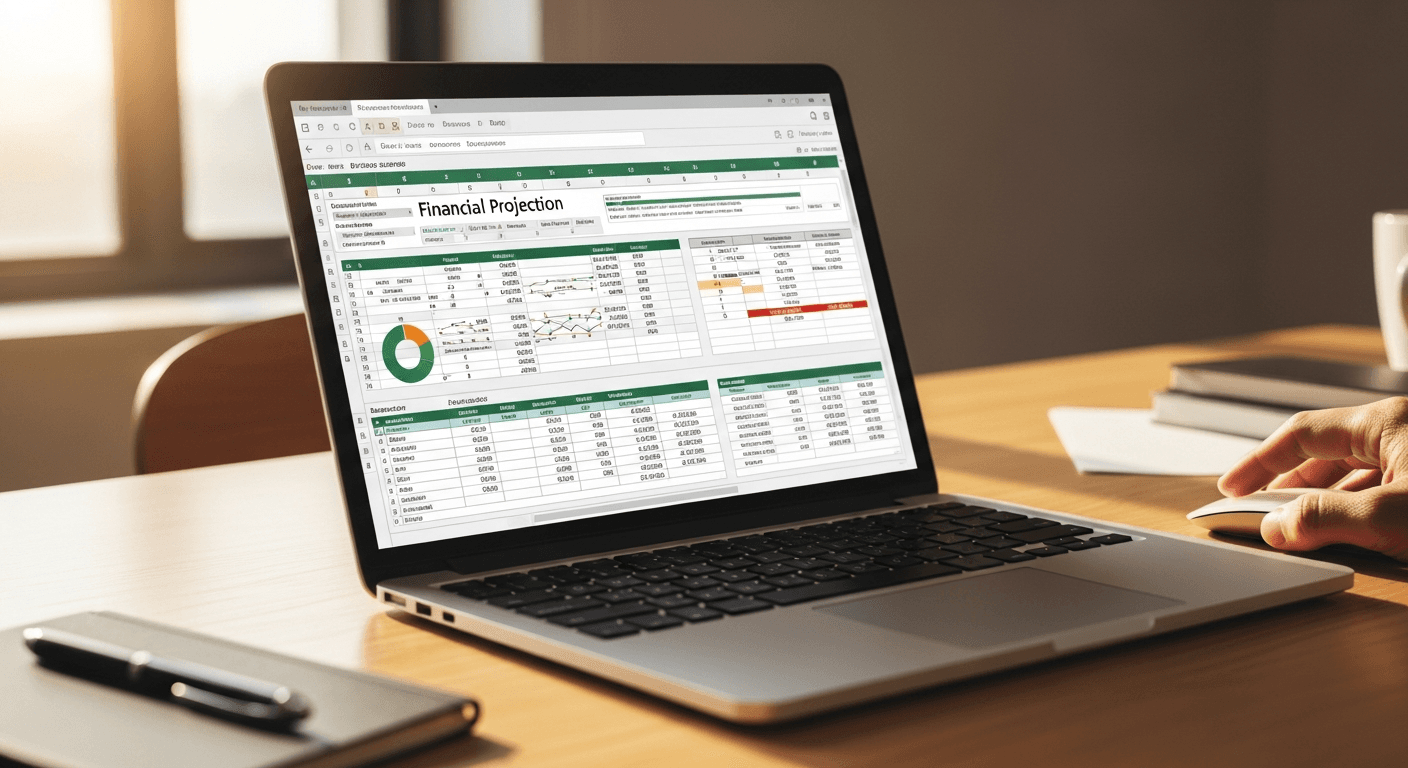
How to Build Financial Projections
Start with revenue projections, but ground them in reality. Research your market size and competition. If you're entering a $100 million market, don't project capturing 10% in year one unless you have a compelling reason why.
Use multiple forecasting approaches to validate your numbers. Bottom-up forecasting builds from unit sales and pricing. Top-down starts with market size and estimates your share. Driver-based models tie revenue to key metrics like website visitors or sales calls.
Factor in seasonal patterns and growth cycles. Most businesses don't grow in straight lines. Account for slower periods and plan accordingly.
Build expense projections systematically. Fixed costs like rent and insurance stay constant. Variable costs change with sales volume. Semi-variable costs like utilities have both fixed and variable components.
Don't forget about working capital needs. Growing businesses often need cash to fund inventory and accounts receivable before new revenue arrives.
Common Financial Projection Mistakes
Avoid the rookie errors that make investors roll their eyes.
Unrealistic Growth Assumptions Projecting hockey stick growth from day one signals inexperience. Most successful businesses take time to gain traction. Model gradual growth that accelerates as you prove your concept.
Ignoring Cash Flow Timing Revenue recognition and cash collection aren't the same thing. If you invoice customers but they pay 45 days later, you'll have a cash gap even with strong sales.
Underestimating Expenses First-time entrepreneurs consistently underestimate costs. Research actual market rates for everything from insurance to software subscriptions. Plan for unexpected expenses.
Forgetting About Taxes Include corporate income taxes, payroll taxes, and any applicable sales taxes in your projections. These aren't optional expenses.
Static Assumptions Your first projections won't be perfect. Update them regularly as you learn more about your market and customers. Investors expect refinement over time.

Industry-Specific Considerations
Different businesses have different financial patterns. Tailor your projections to match your industry's reality.
Service Businesses Focus on billable hours, utilization rates, and client retention. Service businesses typically have lower startup costs but depend heavily on talent acquisition and retention. Budget accordingly for competitive salaries and benefits.
Product Businesses Account for inventory, manufacturing costs, and longer sales cycles. Factor in product development costs and time to market. Don't forget about storage, shipping, and potential obsolescence.
SaaS and Subscription Models Model monthly recurring revenue, churn rates, and customer acquisition costs. Calculate customer lifetime value and payback periods. SaaS businesses often lose money initially but become profitable as recurring revenue compounds.
Retail Operations Focus on inventory turnover, seasonal fluctuations, and location costs. Retail requires significant upfront investment in inventory and store setup.
As you think about fundraising, plan on giving yourself 18 months of runway based on your costs. This buffer gives you time to hit milestones and raise additional capital without desperation.
Related Guides
Getting Started with Your Projections
Don't wait for perfect information to start building projections. You'll refine them as you learn more about your business and market.
Begin with a simple monthly forecast for year one. Focus on the major revenue streams and expense categories first. Add complexity gradually as your business model becomes clearer.
Use conservative assumptions for revenue and realistic estimates for expenses. It's better to exceed low expectations than miss aggressive targets.
Ready to build professional financial projections without the spreadsheet headaches? Our financial projections tool walks you through each step with industry-specific templates and automated calculations. You'll have investor-ready projections in minutes, not hours.