A business plan is the document that turns a vague idea into something real. It forces you to answer the hard questions, who is your customer, how will you make money, what does the competition look like, before you spend a dollar.
Banks require one for loans. Investors expect one before taking a meeting. The SBA won't process your application without one. And even if you're bootstrapping with your own savings, writing a plan dramatically increases your odds of success.
The question in 2026 isn't whether you need a business plan. It's how you write one.

The Traditional Way: What Goes Into a Business Plan
A standard business plan runs 15 to 30 pages and includes these sections. Whether you write it yourself, hire a consultant, or use AI, the structure is the same.
Step 1: Executive Summary
This is the first page of your plan and the last thing you should write. It's a one page overview of everything, your mission, what you sell, your target market, and the key financial highlights. Think of it as the trailer for your business.
If an investor reads nothing else, they'll read this. Make it count. Our executive summary guide covers exactly what to include and what to skip.
Step 2: Company Description
Who are you, what problem do you solve, and why are you the right person to solve it? This section covers your legal structure (LLC, S-Corp, sole proprietorship), your founding story, and the core values driving your business.
Step 3: Market Analysis
This is where most people get stuck. You need to define your target market, estimate its size, identify trends, and explain why the timing is right. You also need to show that you understand your competition, who they are, what they charge, and where they fall short.
Good market analysis separates serious plans from wishful thinking.
Step 4: Products and Services
What exactly are you selling? Describe your product or service in concrete terms. Explain the pricing, the delivery model, and what makes your offering different from alternatives. If you have intellectual property, patents, or proprietary technology, this is where you mention it.
Step 5: Marketing and Sales Strategy
How will customers find you, and how will you convert them? Cover your channels (SEO, social media, paid ads, partnerships, referrals), your pricing strategy, and your sales process from first touch to closed deal.
Step 6: Operations Plan
The day to day details. Where will you operate? What tools and systems will you use? Who handles what? If you have suppliers, manufacturers, or logistics partners, outline those relationships here.
Step 7: Financial Projections
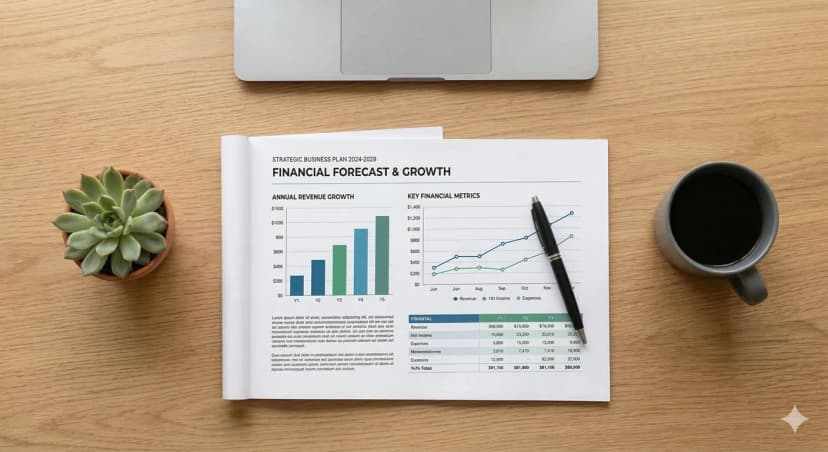
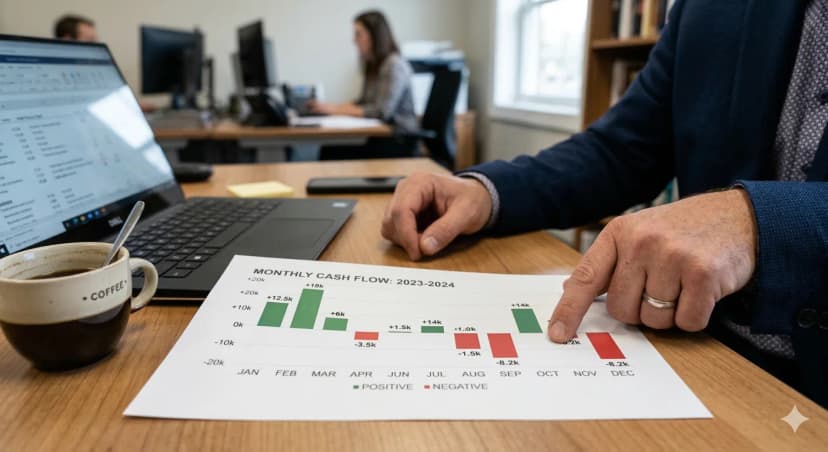
The section investors care about most. You need revenue forecasts, expense breakdowns, cash flow projections, and a break even analysis, typically covering 3 to 5 years. Our pro forma financial statements guide walks through how these three statements connect. If you're seeking funding, include how much you need, what you'll use it for, and the expected return.
Step 8: Team and Management
Who's on your team, and why are they qualified? Include key roles, relevant experience, and any advisory board members. If you're a solo founder, explain how you'll cover the skill gaps.
Step 9: Funding Request (If Applicable)
If you're raising money, state exactly how much you need, how you'll use it, and what type of funding you're seeking (equity, debt, grant). Be specific, "$150,000 for inventory and first six months of marketing" is better than "we need capital to grow."
What This Actually Costs (Time and Money)
Let's talk about what nobody warns you about upfront.
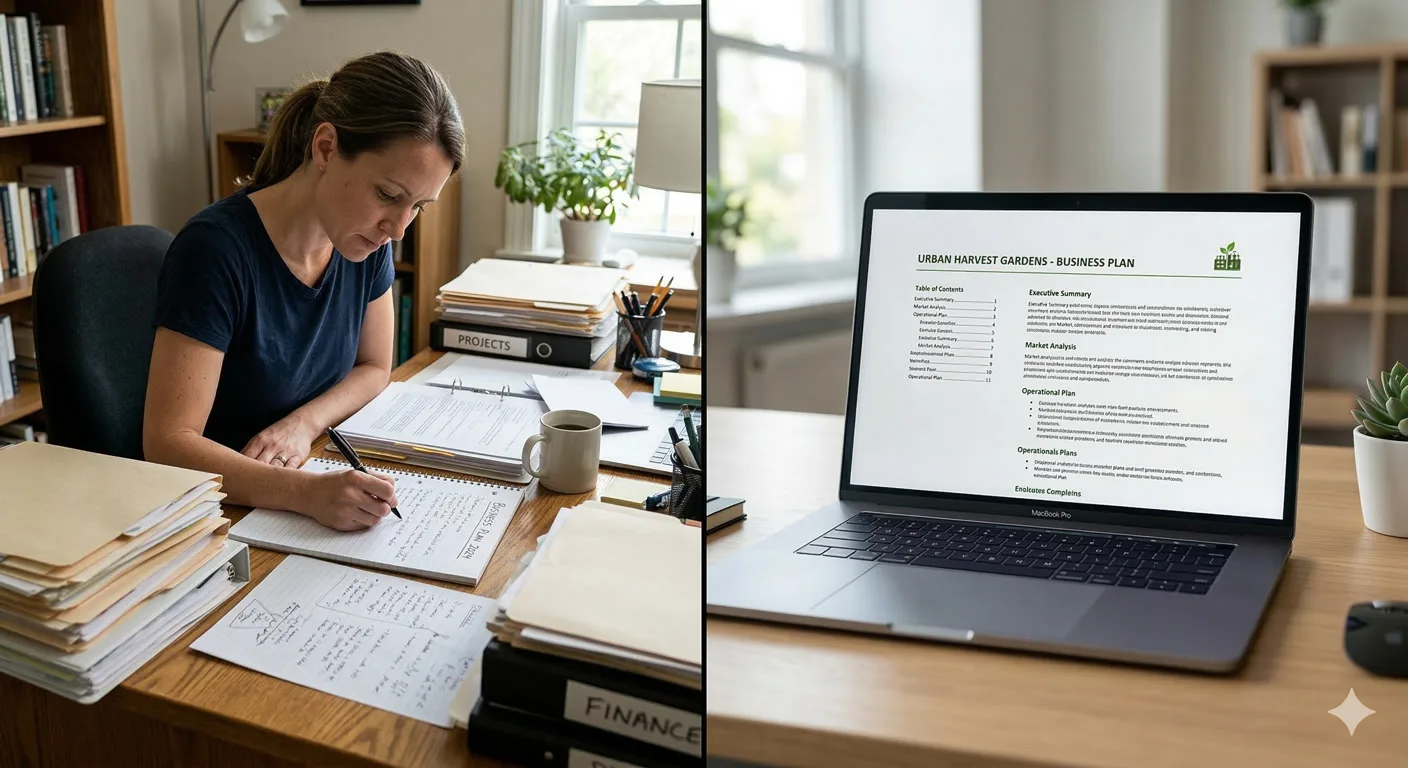
Writing it yourself takes the average first time entrepreneur 40 to 80 hours. That's one to two full work weeks spent researching markets, building financial models in spreadsheets, and staring at a blank page trying to sound like you know what you're doing. We've talked to hundreds of founders, and this is the step where most people quietly give up.
Hiring a consultant costs $2,000 to $10,000 depending on complexity, and takes 2 to 8 weeks. You get expertise, but you also get back and forth revisions, scheduling delays, and a document that may or may not capture your actual vision. For a complex raise above $5M, a consultant can be worth every dollar. For most small businesses and startups, it's overkill.
Using a template (from the SBA, Shopify, QuickBooks, or Google Docs) is free, but you're still filling in every section yourself. Templates give you structure, not content. You still need to do all the research, write the copy, and build the financials from scratch.
The AI Alternative
This is where things have changed. AI business plan generators flip the process: instead of starting from a blank page, you answer a set of targeted questions about your business, and the AI produces a complete plan with all nine sections filled in.
How PlanArmory works:
- You answer 7 strategic questions, your business idea, target market, revenue model, competitive advantage, and a few more
- Our AI (powered by GPT-4) processes your answers and generates a full 20 to 30 page business plan
- The whole thing takes about 60 seconds
- You download it as a formatted PDF
The plan includes real market analysis, financial projections, competitive positioning, and a go to market strategy. It's the same structure banks and investors expect, produced at a fraction of the cost and time.
Generate your business plan for free, takes 60 seconds →
AI vs. Traditional: An Honest Comparison
| DIY | Consultant | AI (PlanArmory) | |
|---|---|---|---|
| Time | 40-80 hours | 2-8 weeks | 60 seconds |
| Cost | Free (your time) | $2,000-$10,000 | Free to $29 |
| Market research | Manual | Included | AI-generated |
| Financial projections | Build from scratch | Included | Auto-generated |
| Format | Varies | Professional | Investor-ready PDF |
| Revisions | Unlimited (more time) | Limited scope | Regenerate anytime |
| Best for | Hands-on learners | Complex raises ($5M+) | Most entrepreneurs |
AI won't replace a consultant for a $10M Series A with complex cap tables and detailed unit economics. But for the vast majority of entrepreneurs, first time founders, small business owners applying for loans, side hustlers validating an idea, AI delivers 90% of the value in 1% of the time.
Which Approach Should You Choose?
Use AI if you:
- Are starting a small business or startup and need a professional plan fast
- Are applying for an SBA loan or small business grant
- Want to validate an idea before committing time and money
- Have a limited budget (or no budget at all)
- Need to iterate quickly across multiple business ideas
Hire a consultant if you:
- Are raising $5M+ in a complex fundraising round
- Need deep, proprietary industry research beyond public data
- Want ongoing strategic advisory, not just a document
Write it yourself if you:
- Want the learning experience of working through every section
- Have significant domain expertise in your market
- Are in no rush and enjoy the process
For most people reading this, the best move is to start with AI. Generate a solid first draft in 60 seconds, read through it, tweak anything that needs your personal spin, and use it to actually move forward. Whether that means pitching investors, applying for a loan, or just figuring out if your idea is worth pursuing.
We've also published detailed guides for specific industries: restaurant, construction, real estate, nonprofit, security company, and vending machine business plans. Each covers the industry-specific financials and requirements that generic guides miss.
Try PlanArmory free, your first business plan is on us →
Related Guides
-
How to Start a Business in 2026: The Ultimate Step-by-Step Guide — The complete guide for this topic
-
SWOT Analysis Examples: How to Write One for Your Business Plan — The complete guide for this topic
-
Business Plan Examples: 15+ Real Plans by Industry — The complete guide for this topic
-
Most Profitable Businesses to Start in 2026 (Data-Backed) — The complete guide for this topic
-
Side Hustle Ideas: 50+ Ways to Make Money in 2026 — The complete guide for this topic
-
How to Start an Online Business in 2026: From Idea to Launch — The complete guide for this topic
-
Best Industries to Start a Business: Where to Focus in 2026 — The complete guide for this topic
What Comes After the Plan
A business plan isn't a static document you write once and forget. The best entrepreneurs treat it as a living reference, something they revisit quarterly, update with real numbers, and use to course correct.
If you're just getting started and need inspiration for what business to launch, check out our guide to the best small business ideas for 2026. Every idea includes a direct link to generate a complete plan.
Your idea deserves more than a napkin sketch. Give it a real plan.