Starting a business without a budget is like driving cross-country without a map. Sure, you might get there eventually, but you'll waste a lot of gas and probably end up sleeping in your car more than you'd like.
The good news? You don't need fancy software or an MBA to create a solid business budget. A well-structured Excel template does the job perfectly, especially when you're bootstrapping and every dollar counts.
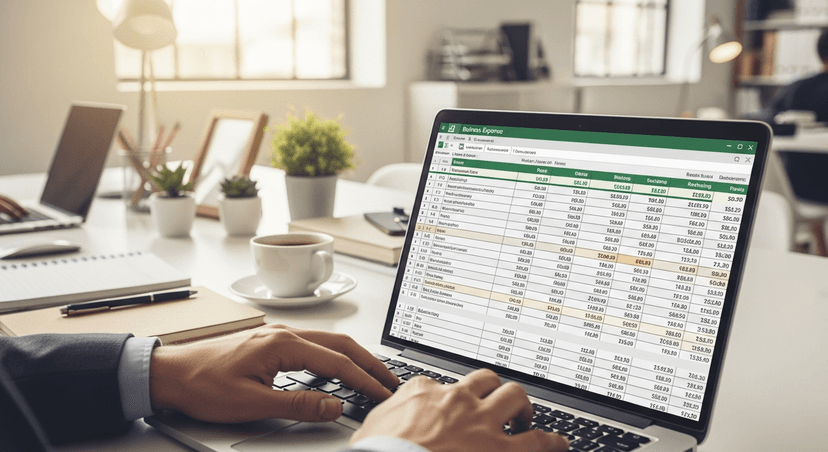
Download the free Excel template — includes a monthly budget tracker, startup costs worksheet, and instructions. Fill in your numbers and the formulas handle the rest.
Why Your Startup Needs a Business Budget Template
Here's what happens without a budget: you burn through cash, miss opportunities, and wonder why your bank account is empty while your competitor just raised a Series A. More than 8 in 10 small businesses fail because of cash flow problems. That's not a typo. Eight out of ten.
A business budget template forces you to think through every expense before it happens. It shows you exactly how much runway you have and when you'll need to raise money or hit profitability. Most importantly, it keeps you from making the classic founder mistake of confusing revenue with profit.
What Makes a Good Business Budget Template
Skip the 47-tab monster spreadsheets floating around the internet. A good startup budget template balances detail with usability. You want something that tracks the essentials without requiring a finance degree to understand.
Your template needs these core components:
- Revenue projections by source
- Fixed and variable expenses
- Cash flow tracking
- Burn rate calculations
- Scenario planning capabilities
The average cost of starting a business is $40,000, but that number varies wildly. Your budget template should help you figure out your specific number, not rely on generic averages.
Essential Components Every Template Needs
Revenue Forecasting
Start conservative. Really conservative. One-third of startups fail due to lack of product demand, often because founders overestimated their revenue potential. Your template should break revenue down by customer segment, pricing tier, or product line.
Operating Expenses
Payroll will eat most of your budget. For venture-backed startups, payroll-related expenses consume 76% of total operating costs. A typical 10-person startup using basic pricing plans spends $115 to $790 monthly just on payroll processing, before you even pay anyone.
Cash Flow Tracking
Revenue doesn't equal cash in the bank. Your template needs to track when money actually hits your account versus when you invoice. This is where most startups stumble.
Want to dive deeper into cash flow specifics? Check out our guide on cash flow projections for detailed examples and common pitfalls to avoid.
Scenario Planning
Build three versions: realistic, optimistic, and "everything goes wrong." The realistic version is your operating plan. The optimistic helps you plan for growth. The pessimistic keeps you from running out of money.
How to Build Your Startup Budget
Step 1: Map Your Revenue Streams
List every way you'll make money. Be specific. "Consulting" isn't enough. Break it down: "Strategy consulting at $200/hour, 20 hours/month" gives you real numbers to work with.
Step 2: Calculate Fixed Costs
These are the bills that show up whether you make money or not. Rent, insurance, software subscriptions, that coworking space membership you forgot to cancel. For a typical startup, fixed costs can run anywhere from $5,000 to $50,000 monthly depending on your industry and location.
Step 3: Estimate Variable Expenses
These scale with your business. Sales commissions, payment processing fees, customer support costs. The fintech industry sees this clearly - the global market hit $340.1 billion in 2024 and these variable costs can make or break unit economics.
Step 4: Add Your Runway Calculation
Divide your cash on hand by your monthly burn rate. That's how many months you can survive without revenue. Most experts recommend 18-24 months of runway, though in reality, many startups operate with much less.
Common Budget Mistakes to Avoid
Forgetting about taxes. The IRS lets you deduct up to $5,000 of startup costs in your first year, but you still need to budget for quarterly payments and payroll taxes.
Ignoring regulatory costs. New businesses created after January 1, 2024 must register within 90 days or face fines up to $10,000. Healthcare startups average $4.6 million in funding partly because regulatory requirements drive up costs from day one.
Underestimating hiring costs. Tech startups pay software engineers an average of $102,000 per year, but that's just salary. Add benefits, equipment, and overhead, and you're looking at 1.5x to 2x that number.
Being too optimistic about timing. Everything takes longer than you think. If you plan to hire in month 3, budget for month 2. If you expect revenue in month 6, plan for month 9.
Using Financial Projections with Your Budget
Your budget template works hand-in-hand with broader financial planning. While your budget tracks day-to-day operations, pro forma financial statements show investors your long-term vision. Most VCs expect both - the budget proves you can manage cash today, while projections show you understand your market opportunity.
Industry-Specific Considerations
Different industries need different budget approaches. A software startup might spend heavily on developer salaries but have minimal inventory costs. A retail business flips that equation.
EdTech startups operate in a market valued at $340 billion in 2024, but they often face long sales cycles to schools and districts. Your budget needs to account for these extended timelines.
Real estate tech is another beast entirely. The proptech industry will grow from $40.19 billion in 2025 to $88.37 billion by 2032, but these startups often need significant upfront capital for platform development and market entry.
Tools and Resources
While 58% of finance leaders still use Excel as their primary automation tool, you don't have to start from scratch. A good business budget template saves you hours of setup time and helps avoid common formatting errors.
Excel remains popular for good reason. It's flexible, widely understood, and doesn't require monthly subscriptions. Plus, over 75% of FP&A job listings require Excel skills, so learning it now pays dividends if you ever hire financial help.
If you haven't grabbed it yet, download the free template here. It has three tabs: monthly budget (revenue + expenses with auto-calculated totals), startup costs (estimated vs. actual tracking), and instructions.
Related Guides
-
Business Proposal Template: Free Examples & How to Write One — The complete guide for this topic
-
Marketing Plan Template: Free Download with Examples — The complete guide for this topic
-
Income Statement Template: Free Excel Download with Examples — The complete guide for this topic
-
Financial Statement Template Excel: Free Download for Small Business
-
Financial Projections Template: Free Excel Download with Examples
-
Profit and Loss Statement (Income Statement) Template: Free Download with Examples
Next Steps
Your business budget isn't a set-it-and-forget-it document. Review it weekly when you're starting out, then monthly once you establish patterns. Update your assumptions as you learn more about your actual costs and revenue cycles.
Ready to create your complete financial picture? A budget template handles your day-to-day planning, but investors expect comprehensive financial projections too. Our financial projections tool creates professional forecasts that complement your operating budget. It's free to start and takes about 10 minutes to build your first projection.