You can launch a cleaning business for $800. A coffee shop can run $80,000 to $300,000. Same word, "business," wildly different price tags. That gap is why any startup cost calculator is only as good as the numbers you feed it.
Use the calculator below for a quick number. Then read on to make each line realistic, see what belongs in it, and learn where people get burned.
Startup cost calculator
Enter your best guess for each line. Leave anything that doesn't apply at 0. Nothing you type is saved.
- One time costs
- $0
- 6 months of monthly costs ($0 a month)
- $0
- 20% cash cushion
- $0
- Total you need to launch
- $0
Your total goes into the plan's funding section. Free preview in about 60 seconds, no credit card required.
What a Startup Cost Calculator Actually Does
The math is simple. Gusto's formula is startup costs = one time expenses + ongoing costs. One time costs cover registration, equipment, initial inventory, branding, and website setup. Ongoing costs are the recurring stuff, like rent, software, marketing, and payroll.
The hard part is being honest with yourself. Founders underestimate total startup capital most often because they forget that revenue rarely covers expenses from day one. Your first few months will probably run in the red, so your estimate has to cover that.

Startup Cost Calculator Benchmarks by Business Type
Most US small businesses spend anywhere from $3,000 to $200,000 or more, according to Xero. That range is too wide to help you. Narrow it down:
- Service businesses: $3,000 to $10,000
- Online businesses: $5,000 to $50,000
- Retail: $50,000 to $150,000
- Manufacturing: $50,000 to $500,000 or more
SmallBizHandbook breaks it down further. Consulting or freelance work runs about $2,000 low, $5,000 mid, and $10,000 high. A salon or barbershop runs $10,000 to $50,000. A food truck starts around $30,000 and can pass $130,000.
Restaurants are where sources disagree most. One estimate says $25,000 to $150,000 or more. Another dataset of 53 business types puts restaurants at $175,000 to $750,000, the most expensive category. Treat these as ballparks and get local quotes before you trust either number.
Here's the good news. In that same dataset, 30 of the 53 business types could start for under $20,000.
How to Build Your Startup Cost Calculator in Six Categories
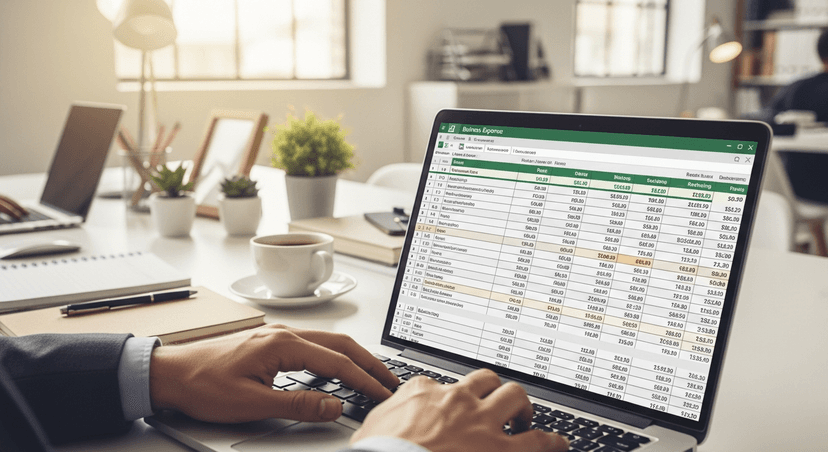
Want more detail than the calculator gives you? Open a spreadsheet and make six rows:
- Legal and registration
- Equipment and technology
- Location and facilities
- Inventory and supplies
- Marketing and branding
- People and payroll
Fill each one with a low, mid, and high number. Here are some line items to anchor you:
- LLC filing: $35 in Montana up to $500 in Massachusetts. The national average is about $130.
- Insurance: basic coverage runs $300 to $600 a year, though some businesses pay up to $5,000.
- Website and domain: $200 to $5,000.
- Marketing and ads: $500 to $5,000 a month.
- Bookkeeper: $150 to $500 a month.
- Accounting software: $0 to $30 a month.
Location matters too. California and New York cost 50 to 100% more than Mississippi or Arkansas, so don't copy a national number without adjusting.

Labor deserves extra scrutiny. It's often a startup's largest recurring expense, and it's the line people lowball most.
Once you've filled in the rows, check the proportions. Equipment and inventory typically eat 30 to 50% of the total. Lease deposit and buildout take 20 to 40%. Working capital for the first 3 to 6 months takes 15 to 25%. If your split looks nothing like that, recheck your math.
Add a Cash Cushion to Your Startup Cost Calculator
Pad your total. One common calculator formula adds a cash reserve of 20% of total startup costs. Other estimators project capital through a runway of 6 to 12 months.
If you're quitting a job, add 3 to 6 months of personal living expenses too. One guide suggests pairing that with 6 months of business operating expenses, which typically lands at $20,000 to $50,000 for most small businesses.
Including a three month reserve, total launch costs run from about $10,000 for a lean service business to $100,000 or more for retail or food service. That's the number you should be raising or borrowing against, not the bare opening costs.
Know What the IRS Lets You Deduct
You can elect to deduct up to $5,000 of business startup costs and up to $5,000 of organizational costs. That's a potential $10,000 deduction in year one.
There's a catch. The deduction shrinks dollar for dollar once startup costs pass $50,000, and it disappears at $55,000. Anything you can't deduct right away gets amortized over 180 months, or 15 years. You report that on Form 4562, Part VI.
Equipment and vehicles don't count as startup costs here. You recover those through depreciation instead.
What counts? IRS Publication 583 lists costs like advertising, travel, market surveys, and training that you pay before you open. Ask a tax pro how the rules apply to your own spending.
Mistakes That Wreck Your Estimate
You'll sink your numbers fast if you:
- Use one number instead of a low, mid, and high range
- Forget that you'll pay yourself something eventually
- Count equipment as a deductible startup cost
- Skip the reserve because it feels pessimistic
Pessimism is the point. A padded estimate gives you room to breathe when your first month's sales come in light.
Turn Your Estimate Into a Plan
A total cost number isn't the finish line. Next, map when the money actually leaves your account. Our guide to cash flow projections walks through that. Then set spending limits with a business budget template and track real spending with a business expenses template.
You'll also want to see how costs stack up against revenue over time. That's what financial projections do, and our income statement template shows you how to lay out profit and loss once you're up and running. If cash is tight, starting a business with no money has realistic ways to shrink your starting number.

Next Step
Your cost estimate is one piece of the puzzle. If you want it to feed into a full plan, try the financial projections tool to turn your numbers into forecasts. It's free to start, and it'll save you a few hours of spreadsheet wrestling.