Financial Forecast: How to Build One for Any Business
Building a financial forecast feels overwhelming when you're staring at a blank spreadsheet. You know you need one for loans, investors, or just to avoid running out of cash, but where do you even start?
you don't need an MBA or expensive software to create a solid financial forecast. You need the right approach and about 30% of businesses that close by their second year probably wish they'd taken forecasting more seriously.

What Is a Financial Forecast (And Why You Can't Skip It)
A financial forecast predicts your business's financial performance over a specific period. Think of it as your financial GPS. It shows where your money's coming from, where it's going, and whether you'll have enough to keep the lights on.
You can't wing this part. Close to 40% of SMBs carry over $100,000 in debt, and many could've avoided financial trouble with better forecasting. Banks want to see forecasts before approving loans. Investors won't even take meetings without them.
Your forecast typically includes three core statements: income statement (revenue and expenses), cash flow statement (when money actually moves), and balance sheet (what you own versus what you owe). For startups, 5-year forecasts are common. Established businesses often work with 2-3 year forecasts.
The Building Blocks: Revenue, Expenses, and Cash Flow
Start with revenue because everything else flows from there. Don't just guess. Look at your market size, pricing strategy, and realistic sales cycles. If you're selling B2B software with a 6-month sales cycle, don't forecast immediate revenue.
Break down expenses into fixed costs (rent, insurance, salaries) and variable costs (materials, commissions, shipping). Fixed costs stay the same regardless of sales volume. Variable costs change with your business activity.
Cash flow timing matters more than you think. You might show $100,000 in revenue on paper, but if customers pay 60 days late while you pay suppliers upfront, you'll have a cash crisis. Map out when money actually hits your account versus when it leaves.
Step-by-Step Forecast Creation
Month 1-3: Conservative Assumptions Start conservative, especially for new businesses. If you think you'll land 10 customers in month one, forecast 5. It's better to exceed a conservative forecast than miss an aggressive one.
Historical Data Analysis If you have existing business data, analyze seasonal patterns, growth trends, and expense ratios. Your forecast should reflect reality, not wishful thinking.
Scenario Planning Create three versions: best case, worst case, and most likely. This gives you options when reality doesn't match your initial assumptions. Most investors want to see all three scenarios.
Monthly vs. Annual Forecasting Break everything down monthly for the first year, then quarterly or annually for years 2-5. Monthly detail helps you spot cash flow problems before they happen.
Tools and Software Options
You don't need expensive enterprise software to start. Here's what works:
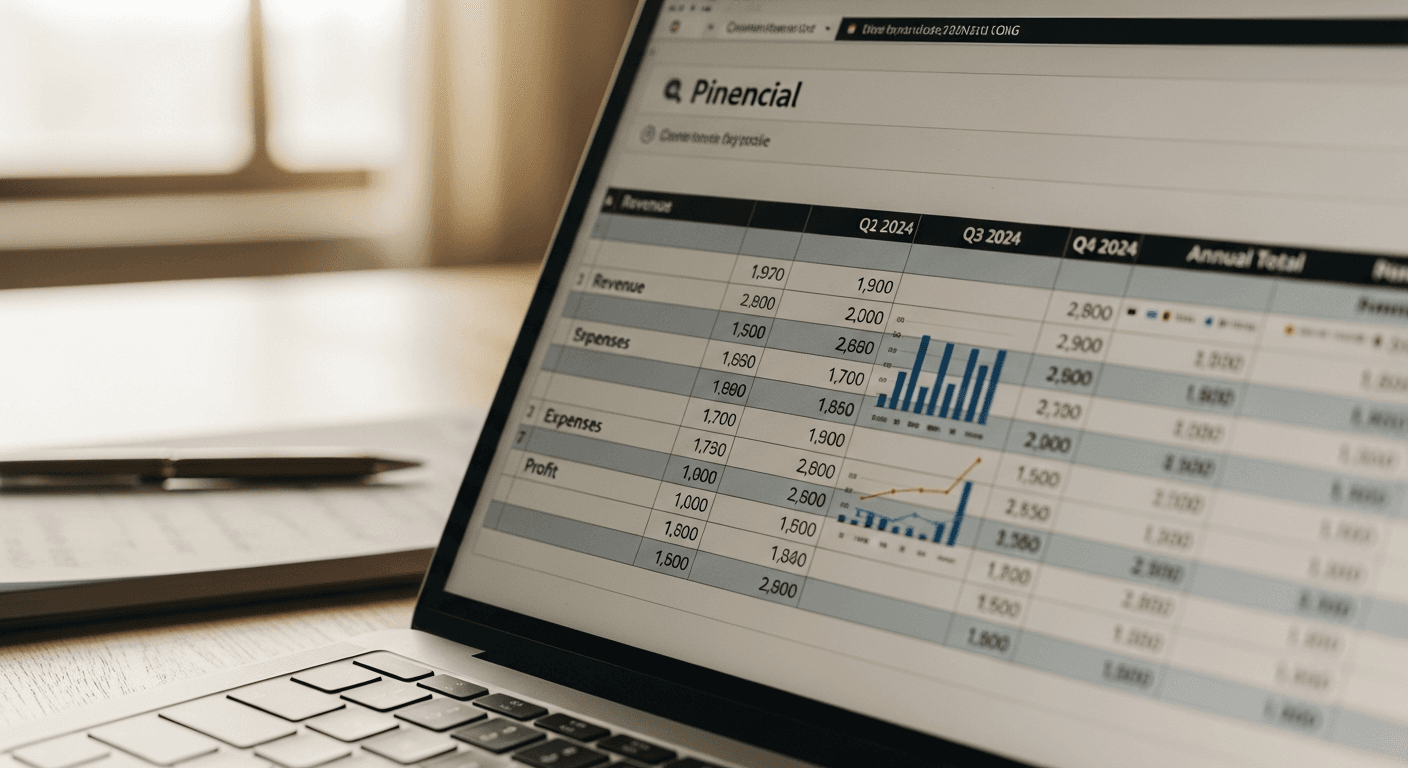
Excel or Google Sheets work fine for basic forecasts. Free, flexible, and you probably already know how to use them. Download a template or build from scratch.
Small business accounting software like QuickBooks ($25-$150/month) or Xero ($11-$42/month) includes forecasting features. If you're already using these for bookkeeping, the forecasting add-ons make sense.
Dedicated forecasting tools start around $250-$1,667/month for small businesses. Cube and Datarails cost $1,500-$2,000+ monthly for mid-market companies. Enterprise solutions like Anaplan average $200,000 per year.
Skip the expensive stuff unless you're forecasting for a complex business with multiple revenue streams and departments. Most businesses can get 90% of the value from basic tools.

Common Forecasting Mistakes to Avoid
Over-optimistic revenue projections kill more forecasts than anything else. Your conversion rates won't be 50% in month one. Your sales cycle won't shrink by half. Your market penetration won't happen overnight.
Forgetting about working capital trips up even experienced business owners. You need cash to buy inventory before you sell it. You need to pay employees before customers pay you. Factor this timing into your forecast.
Ignoring seasonality makes your forecast useless. Retail businesses see holiday spikes. B2B companies often slow down in December. Construction work varies by weather. Build these patterns into your model.
Set-and-forget forecasting defeats the purpose. Your forecast should be a living document you update monthly. Compare actual results to projections and adjust future periods based on what you learn.
Industry-Specific Considerations
Service businesses have simpler revenue models but need to forecast capacity constraints. You can only serve so many clients with your current team. Plan for hiring before you hit those limits.
Retail and e-commerce businesses must forecast inventory needs, seasonal fluctuations, and customer acquisition costs. Factor in return rates and payment processing fees.
Manufacturing companies face complex forecasting with raw materials, production capacity, and longer sales cycles. Working capital requirements tend to be higher.
SaaS and subscription businesses can forecast more predictably once they establish recurring revenue patterns. Focus on customer acquisition cost, lifetime value, and churn rates.
Making Your Forecast Investor-Ready
Investors don't expect perfect predictions. They want to see logical assumptions and conservative estimates. Show your work. Explain how you calculated market size, conversion rates, and pricing.
Include key metrics for your industry. SaaS businesses should show monthly recurring revenue, customer acquisition cost, and lifetime value. Retail businesses need gross margins, inventory turnover, and same-store sales growth.
Address the big risks upfront. What happens if a major customer leaves? What if a competitor cuts prices by 30%? How will you adjust spending if revenue lags projections?
Back up assumptions with data whenever possible. Market research, competitor analysis, customer surveys, and pilot program results all strengthen your forecast credibility.
Related Guides
Beyond the Numbers: Using Forecasts for Decision-Making
Your forecast becomes a management tool once you start tracking actual vs. Projected performance. Falling behind on sales? You might need to cut discretionary spending or accelerate marketing efforts.
Use forecasts to test business decisions before implementing them. What happens to cash flow if you hire two more salespeople? How does a 15% price increase affect profitability assumptions?
Cash flow projections help you plan financing needs. If your forecast shows a $200,000 cash shortfall in month 8, you can arrange a line of credit or raise capital months in advance instead of scrambling when you're almost out of money.
Regular forecast updates keep you ahead of problems. Small misses compound over time. Catching a 10% revenue shortfall in month 2 gives you 10 months to fix it.
Financial forecasting isn't about predicting the future perfectly. It's about making informed decisions with the best information you have. Start simple, use conservative assumptions, and update regularly as you learn more about your business.
Need help building professional financial projections? PlanArmory's financial projections tool walks you through the process step-by-step. You can create investor-ready forecasts in minutes instead of spending weeks wrestling with spreadsheets.