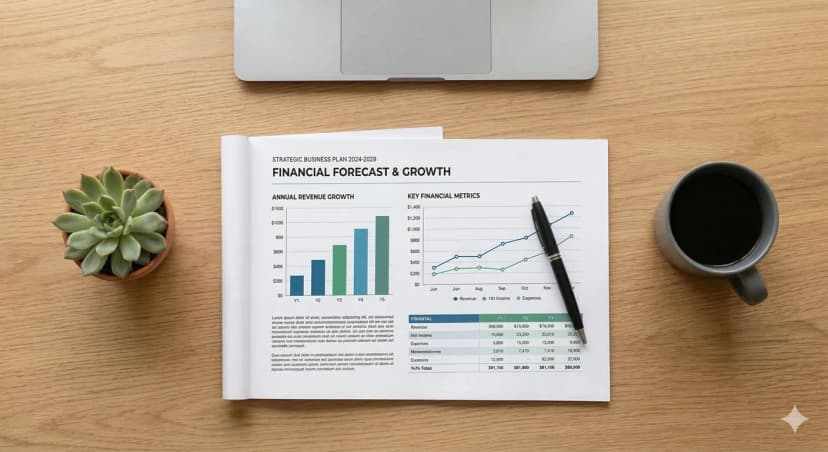
The executive summary sits at the front of your business plan, but you should write it last. It's a summary of everything else in the plan: your business model, your market, your financials, and your funding request. Writing it before those sections exist means you're summarizing nothing.
Most people get this backwards. They spend hours crafting the executive summary first, then build the rest of the plan around it. The result is a summary that doesn't match the details, which is exactly what loan officers catch.
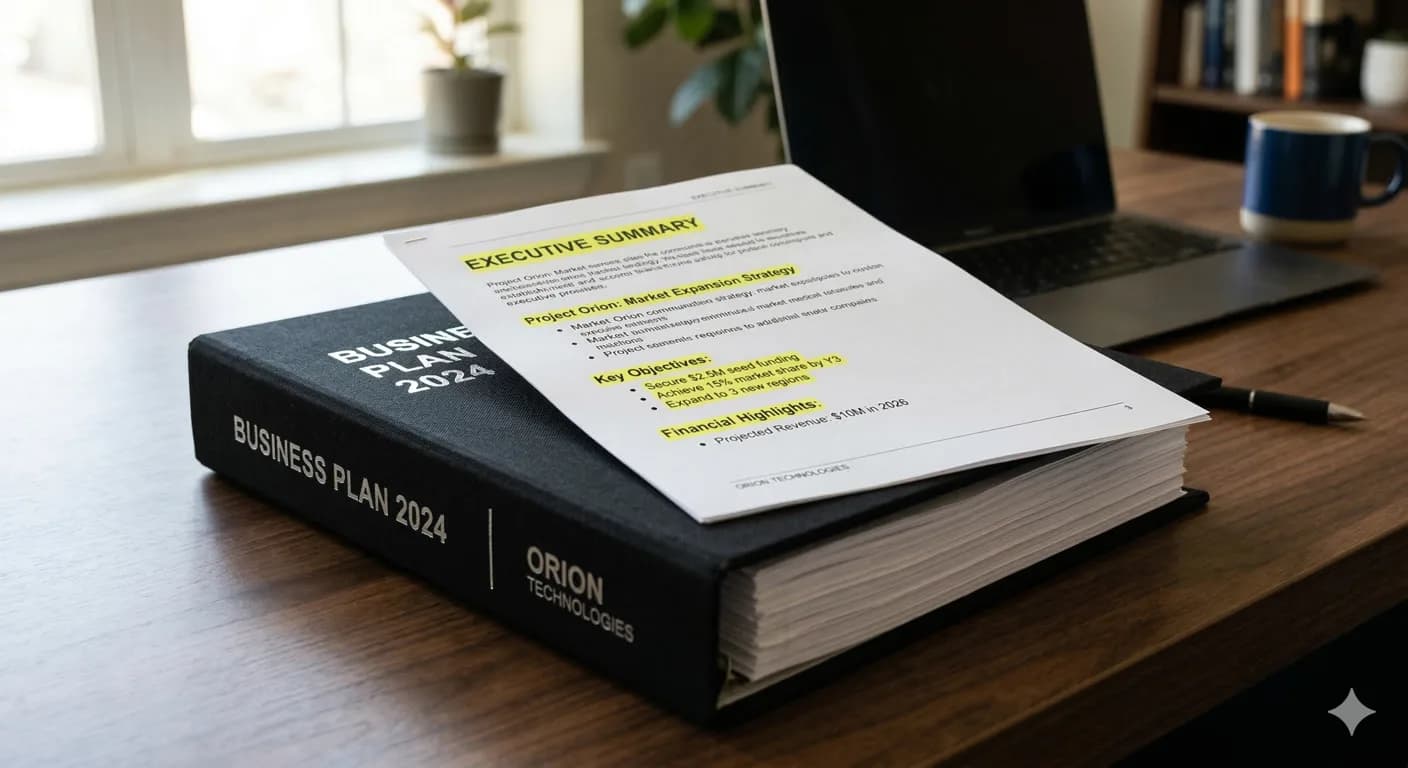
What an Executive Summary Actually Does
A bank loan officer reviews dozens of business plans per week. They don't read all of them cover to cover. They read the executive summary, flip to the financials, and decide whether the rest is worth their time.
If your summary doesn't answer the basic questions in one page, the rest of your plan may not get read at all. Our bank loan business plan guide covers this dynamic in detail: lenders care about repayment capacity, and your summary needs to signal that immediately.
For investors, the bar is different but equally blunt. They're screening for market size and return potential. If neither shows up in the first page, they move on.
The executive summary isn't a teaser or an introduction. Someone should be able to read it, skip the rest of the plan, and still understand what the business does and why it'll work.
What to Include
Business Overview
What you do, who you serve, and how you make money. One to two sentences. If you can't explain it that concisely, the business model isn't clear enough yet.
Include your legal structure (LLC, S Corp), location, and how long you've been operating. If you're prerevenue, say so. Trying to hide it wastes everyone's time because the financials section will reveal it anyway.
The Problem and Your Solution
What specific problem does your customer have, and how do you solve it? Skip the grand vision. "Small business owners spend 40+ hours writing business plans that still get rejected by lenders" is a problem statement. "We're revolutionizing the business planning space" is not.
If you can put a dollar amount or time cost on the problem, do it. Vague problems produce vague solutions, and lenders notice.
Target Market
Who exactly are you selling to, and how big is that market? Use a credible source for the market size: Census Bureau, IBISWorld, or a trade association. Investors and lenders will verify this number, so don't pull it from a random blog post.
Narrow your focus. "All small businesses in America" isn't a target market. "Owner operated restaurants in the Southeast doing $500K-$2M in annual revenue" is one. The more precisely you define your customer, the more believable your revenue projections become.
Revenue Model and Traction
How do you charge? Subscription, per unit, project based, hourly? State the pricing structure and your average transaction size or contract value.
If you have existing revenue, state it. "Currently generating $18,000/month in recurring revenue with 45 active accounts" tells a lender more than two pages of market analysis. If you're prerevenue, include whatever evidence of demand you have: letters of intent, pilot agreements, preorders, or a waitlist with actual numbers behind it.
Financial Highlights
Pull the three to five most important numbers from your financial projections: Year 1 revenue, gross margin, projected net income, and breakeven timeline. If you're applying for a loan, include your projected debt service coverage ratio (DSCR).
Don't dump a full P&L into the summary. The financial section of your plan handles the detail. The summary should show that the business model works on paper and that you've done the math.
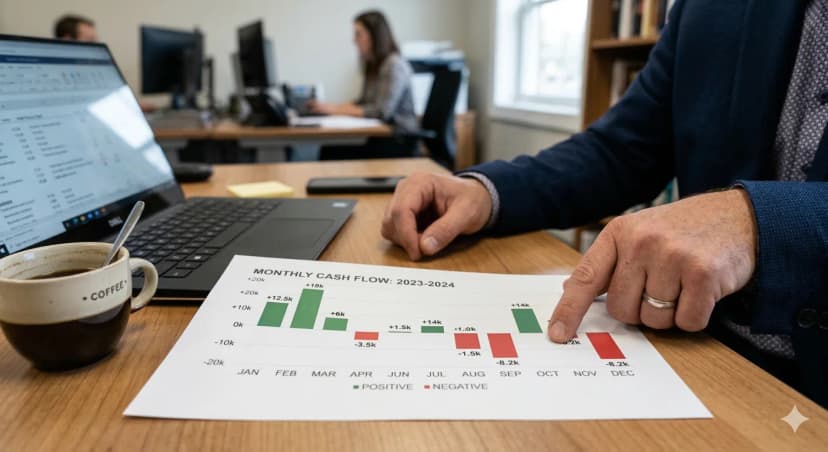
For businesses where cash timing matters more than profitability (construction, B2B services, seasonal businesses), highlight your cash flow position instead of just net income. A lender will notice if you show strong profits but skip the cash flow question.
Funding Request
If you're seeking financing, be specific: how much, what type (loan vs. equity), and exactly how the money will be used. "Seeking $250,000 SBA 7(a) loan for equipment ($120,000), initial inventory ($60,000), working capital ($50,000), and leasehold improvements ($20,000)" gives a lender something to underwrite.
"Seeking funding to grow the business" gives them nothing.
If you're applying for an SBA loan specifically, our SBA business plan guide covers the additional requirements beyond the standard plan.
Competitive Advantage
Why you instead of the three businesses already doing this? Keep it to two to three sentences. The best answers are structural: exclusive supplier agreements, proprietary technology, regulatory licenses that take years to obtain, or a location advantage. "Better customer service" is not a competitive advantage because every business plan says that.
What to Leave Out
Company history beyond what's relevant. "Founded in 2019 by two college friends who shared a passion for..." doesn't help. "Operating since 2019 with $1.2M in cumulative revenue" does.
Industry trends and macro analysis. Save this for the market analysis section. The summary should reference your specific market, not the state of the global economy.
Technical details. If your product involves complex technology, explain the benefit in plain language. The summary is not the place for architecture diagrams or patent descriptions.
Anything you can't back up in the plan. Every number and claim in your summary should have supporting detail somewhere in the full document. If you project $500,000 in Year 1 revenue, the financial section needs to show the math behind that number.
How Long Should It Be?
One page is ideal. Two pages is acceptable for complex businesses. Anything longer defeats the purpose.
Most lenders expect a one page summary. If yours runs longer, that's usually a sign the business model has too many moving parts, not that you need more space.
An Executive Summary Structure That Works
Here's a format that covers everything a lender or investor needs:
Paragraph 1: What the business does, how long it's been operating, and its legal structure. Two to three sentences.
Paragraph 2: The problem you solve and for whom. Two to three sentences with a specific, quantifiable problem.
Paragraph 3: How you make money. Pricing model, average deal size, and current traction (revenue, customers, or pipeline).
Paragraph 4: Market size and your specific customer segment. One to two sentences with a cited source.
Paragraph 5: Financial highlights. Year 1-3 revenue projections, gross margin, breakeven point, and DSCR if applying for a loan.
Paragraph 6: The ask. How much you need, what type of financing, and a line item breakdown of how it'll be spent.
Six paragraphs. One page. Everything a lender or investor needs to decide whether to keep reading.
Common Mistakes
Writing it first. The summary should reflect the completed plan, not guide it. Write it after everything else is done.
Burying the ask. If you're requesting funding, the amount and purpose should appear in the first two paragraphs. Don't make a lender read 400 words before finding out what you want.
Vague financials. "We project strong revenue growth" means nothing. "$420,000 in Year 1 revenue based on 35 clients at $12,000 average annual value" means something.
Overselling. Phrases like "massive untapped market" and "unlimited growth potential" mark the plan as amateur. Let the numbers speak. If the opportunity is real, the data will show it.
Ignoring the audience. A summary for a bank loan should emphasize repayment capacity and collateral. A summary for a venture investor should emphasize market size and growth rate. Same business, different emphasis.
Write Your Executive Summary
The executive summary is the hardest section because it requires the entire plan to already exist. PlanArmory generates a complete business plan with an executive summary, market analysis, and financial projections from your business inputs.