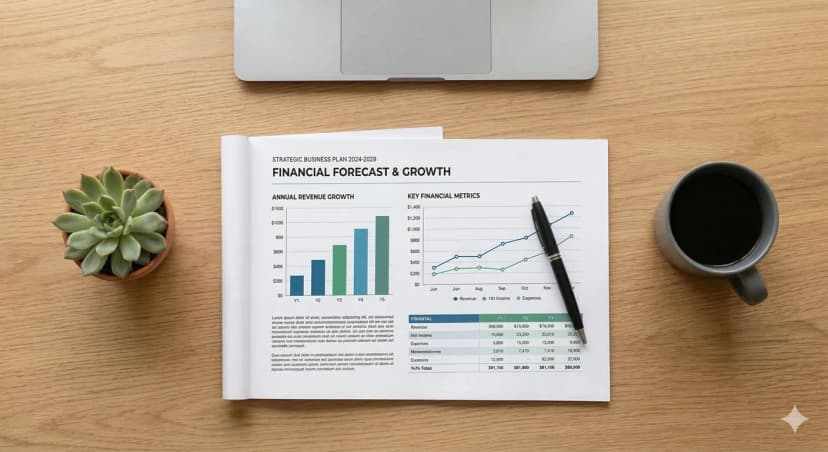
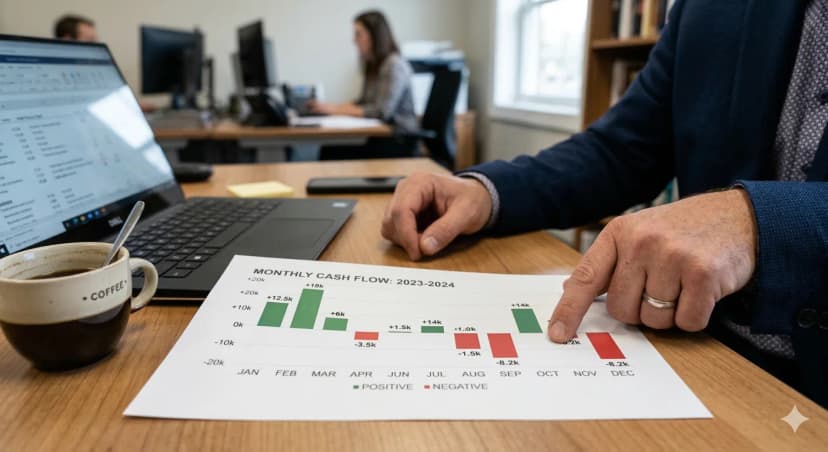
Roughly 60% of restaurants don't survive past five years, according to Bureau of Labor Statistics data. The failure rate is steepest in the first three years. The ones that make it share one thing: they planned for the financial reality of the business, not just the food.
A restaurant business plan forces you to answer the questions that determine whether your concept actually works as a business. How many covers do you need per night to break even? What's your food cost target? Can you afford the rent at 8% of revenue, or does the lease kill you before you open?
Here's what goes into the plan, starting with the numbers that actually determine whether you open or not. For a broader overview of how to write a business plan, see our complete guide.
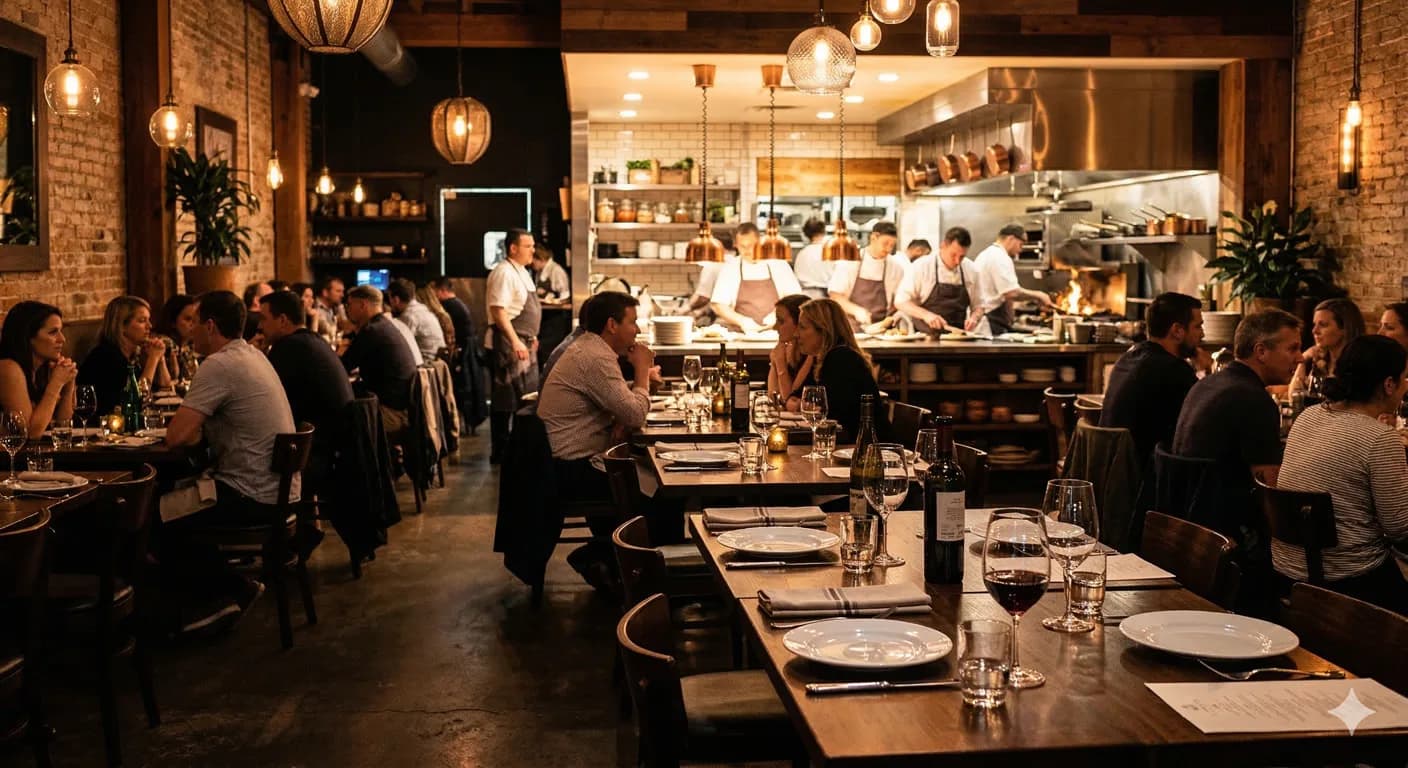
Why Restaurants Need a Business Plan
Three reasons, and none of them are optional.
Financing. Banks and SBA lenders require a business plan for any restaurant loan. Investors expect one before a first meeting. If you need money to open, you need a plan. Our bank loan business plan guide covers what lenders specifically look for.
Lease negotiation. Landlords in competitive markets ask for business plans and financial projections before signing a lease. They want to know you can pay rent for the full term, not just the first six months.
Operational clarity. The restaurant industry has razor thin margins (3-9% net profit is typical for full service). You can't afford to figure out your cost structure after you've signed a lease and hired a team. The plan is where you stress test the numbers.
What to Include
Concept and Overview
What kind of restaurant? Fast casual, full service, fine dining, ghost kitchen, food hall stall? Define the cuisine, price point, service style, and target customer. Be specific: "upscale casual Italian targeting professionals aged 30-55 with an average check of $45" tells a reader something. "A restaurant for everyone who loves great food" tells them nothing.
Include your planned location (or target neighborhoods), hours of operation, and seating capacity. If you've secured a space, include the square footage, lease terms, and any buildout requirements.
Market Analysis
Restaurant success is hyperlocal. National dining trends matter less than what's happening within a 3-mile radius of your location.
Cover the local competitive landscape: who else serves your cuisine type, what they charge, how busy they are, and where the gap is. If you're opening a ramen shop and there are already four within a mile, you need a strong argument for why yours will win.
Include demographic data for your trade area: population density, median household income, office worker foot traffic, and dining out frequency. The Census Bureau and local economic development agencies publish this for free.
Menu and Pricing Strategy
You don't need the final menu, but you need a sample menu with target price points. This is what drives your revenue projections and food cost calculations.
Key metrics to define:
- Average check per person (food + beverage)
- Target food cost percentage: 28-35% is standard; fast casual can run lower, fine dining higher
- Beverage cost percentage: 18-24% for alcohol, higher for nonalcoholic-focused concepts
- Menu engineering: which items are high margin, which are traffic drivers
If your average check is $35 and your food cost is 32%, your gross profit per cover is $23.80. That's the number your entire financial model builds from.
Operations Plan
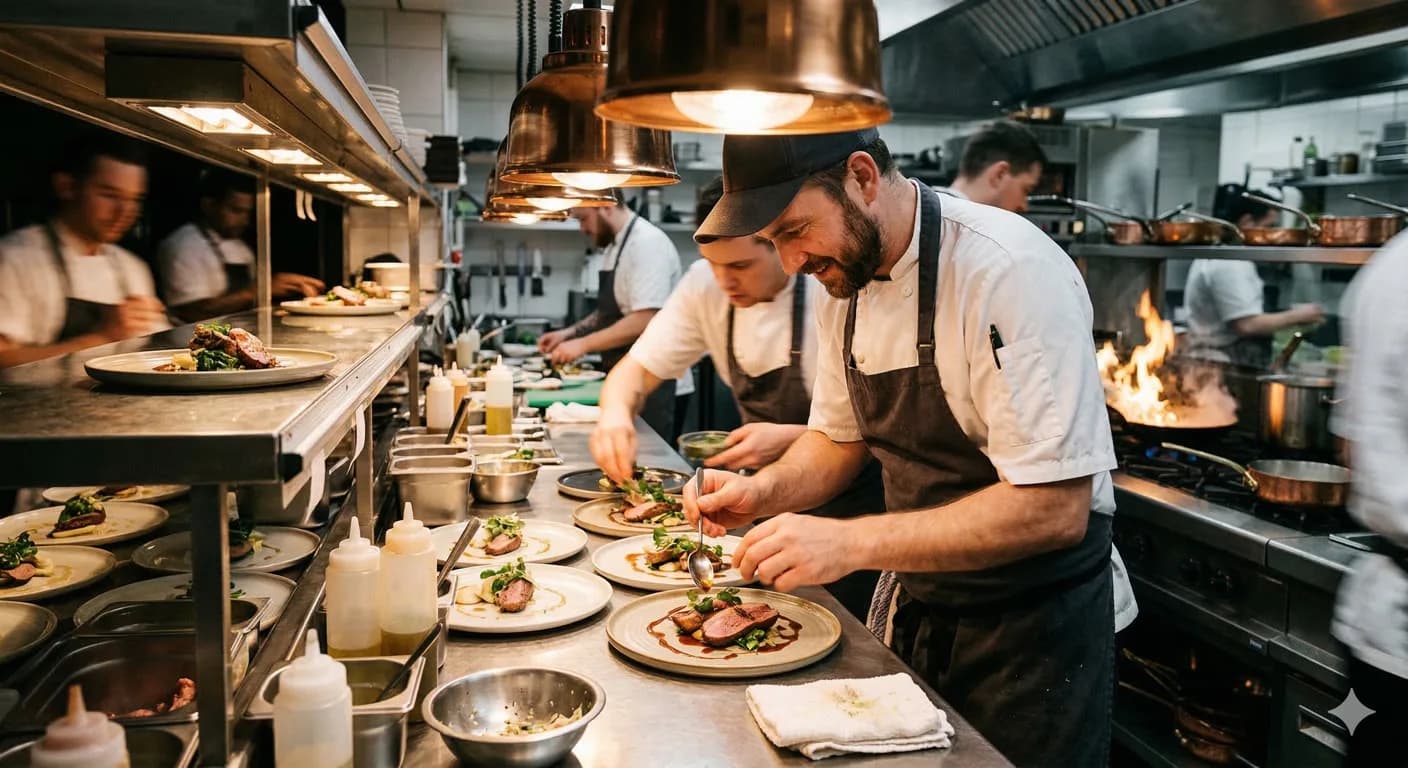
How the restaurant actually runs day to day. This section should cover:
Staffing model. How many FOH and BOH employees per shift? What's your labor cost target? Full service restaurants typically run 25-35% labor cost as a percentage of revenue. Fast casual can get to 20-28%.
Suppliers and sourcing. Where are you buying protein, produce, dry goods? Do you have backup suppliers? Are you locked into any exclusive agreements?
Technology. POS system, online ordering platform, reservation system, inventory management. These aren't afterthoughts; they directly affect operational efficiency and data quality.
Hours and capacity. Covers per day by meal period, table turn times, and seasonality. A 60-seat restaurant doing 1.5 turns at dinner with a $40 average check is looking at $3,600 per dinner service. Multiply that across your operating days, adjust for lunch and seasonal variation, and you have the foundation of your revenue projection.
Financial Projections
This is what lenders and investors actually read first. You need:
- Startup costs: buildout/renovation, kitchen equipment, furniture, signage, initial inventory, deposits, permits and licenses, preopening labor. Most full service restaurants cost $250,000-$750,000 to open. Fast casual runs $150,000-$400,000.
- Monthly P&L projection for Year 1, annual for Years 2-3 at minimum
- Cash flow projection accounting for the ramp up period (most restaurants take 3-6 months to reach steady state revenue)
- Breakeven analysis: how many covers per day at what average check
The standard restaurant cost breakdown targets:
| Category | % of Revenue |
|---|---|
| Food cost (COGS) | 28-35% |
| Labor | 25-35% |
| Rent/occupancy | 6-10% |
| Other operating | 15-20% |
| Net profit | 3-9% |
If your rent is above 10% of projected revenue, the math gets very hard. Many restaurant failures trace back to a lease they couldn't support.
Our restaurant financial projections tool generates these statements from your inputs. For a deeper dive into building linked financial statements, see our pro forma financial statements guide.
Management and Team
Who's running the kitchen? Who's running the floor? Restaurant experience matters more here than in almost any other industry. Lenders and investors want to see that the team has actually operated a restaurant before, not just eaten at one.
If the ownership team lacks direct restaurant experience, address this honestly and explain how you'll compensate: an experienced GM hire, a consulting chef, an advisory board with industry operators.
Common Mistakes
Underestimating buildout costs. Commercial kitchen buildouts routinely run 50-100% over initial estimates. Budget contingency of at least 15-20% on top of contractor quotes.
Ignoring the ramp up period. No restaurant opens at full capacity. Plan for 3-6 months of below target revenue and make sure your cash reserves cover it.
Food cost creep. Your menu looks great at 30% food cost on paper. Then you start substituting ingredients, portions drift upward, and waste accumulates. Model 2-3% higher than your target to be safe.
No beverage program strategy. Alcohol is where restaurants make margin. A well run bar program at 20% pour cost can subsidize lower margins on food. If you're not serving alcohol, your food margins need to be higher.
Build Your Restaurant Business Plan
Writing a restaurant business plan from scratch takes weeks of research and financial modeling. PlanArmory's restaurant business plan generator produces a complete plan with industry-specific market analysis, financial projections, and competitive positioning in about 60 seconds.