Construction is a $2.1 trillion industry in the US (U.S. Census Bureau, 2024), and it's one of the hardest to start without a plan. Not because the business itself is complicated, but because everything around it demands documentation: bonding companies want financials, banks want projections, general contractors want proof of insurance and capacity, and state licensing boards want evidence that you know what you're doing.
A construction business plan isn't a formality. It's what gets you bonded, funded, and bidding on real work. If you're applying for a bank loan or SBA financing, our bank loan business plan guide covers what lenders specifically look for.
What Makes Construction Different
Most business plan guides are written for tech startups or retail shops. Construction operates on a completely different model, and your plan needs to reflect that.
Project based revenue. You don't sell products off a shelf. You bid on jobs, win some, lose some, and revenue comes in chunks tied to project milestones. Your financial projections need to account for this: pipeline estimates, win rates, average project size, and billing schedules.
Cash flow timing is brutal. You pay for materials and labor upfront, invoice on progress, and wait 30-90 days to collect. Retainage (the 5-10% holdback until project completion) makes it worse. A construction company can be profitable on paper and still run out of cash. Your plan needs a cash flow projection that models this timing gap honestly.
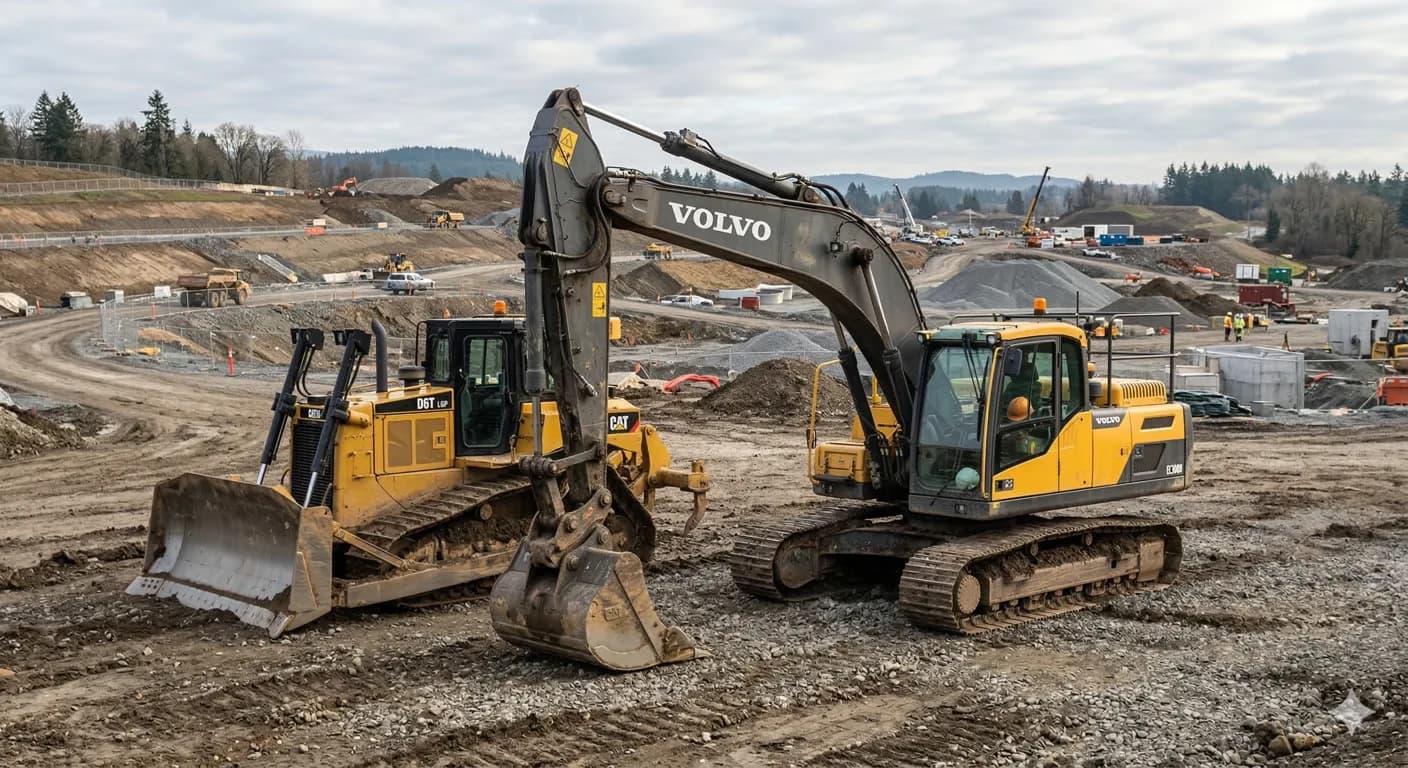
Equipment is capital intensive. A single excavator runs $100,000-$500,000. Even a basic fleet for a small contractor can cost $200,000+. Your plan should break down owned vs. leased equipment, maintenance costs, and replacement schedules.
Bonding capacity drives growth. Surety bonds are required for most commercial and government contracts. Your bonding company evaluates your business plan, financials, and personal credit to set your bonding limit. A weak plan means a low bonding limit, which means you can't bid on larger projects.
What to Include
The standard business plan sections apply, but here's where construction specific detail matters most.
Company Overview
Your legal structure, years in operation, contractor's license number and state, and the type of construction you specialize in: residential, commercial, industrial, heavy/civil, or specialty trades. If you hold specific certifications (OSHA, EPA lead safe, LEED), list them. Bonding companies and lenders look for these.
Services and Specialization
Be specific about what you build and what you don't. A general contractor doing ground up commercial construction is a fundamentally different business from a residential remodeler. Define your scope: new construction, renovation, tenant improvements, design build, or a combination.
Include your typical project size range and geographic service area. "We do everything everywhere" isn't a strategy.
Market Analysis
Identify your local market conditions. Construction is hyperlocal. National trends matter less than what's happening in your metro area. Reference local building permit data (available from the Census Bureau's Building Permits Survey), planned developments, and infrastructure spending in your region.
Name your top 3-5 competitors. What's their reputation? What projects do they win? Where do they fall short? If you're competing for government contracts, note what percentage of local government work goes to small businesses or disadvantaged contractors (DBE/MBE programs).
Operations and Estimating
How do you estimate and bid projects? What software do you use? How do you manage subcontractors? This section matters because it shows operational maturity.
Cover your approach to:
- Estimating and takeoffs (manual, software based, or hybrid)
- Project management and scheduling
- Subcontractor selection and management
- Quality control and punch list processes
- Safety programs and incident tracking
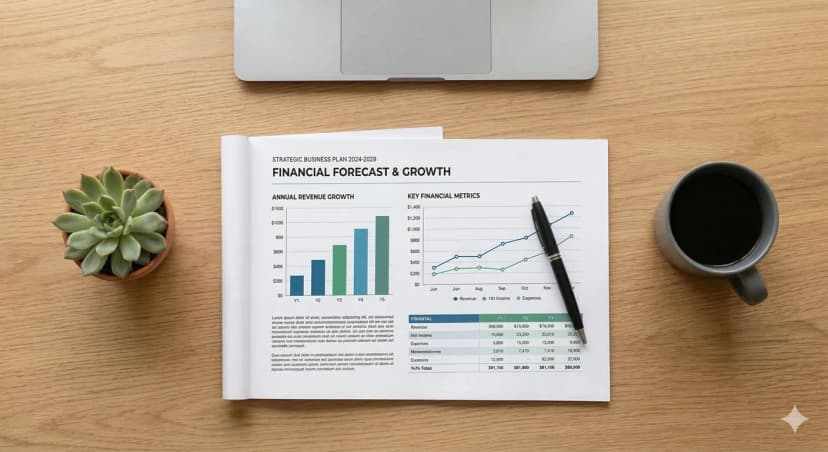
Financial Projections
The financials are what bonding companies and banks actually read. You need:
- Revenue projections based on pipeline, backlog, and historical win rates (not just "we hope to do $2M next year")
- Cost of goods sold broken out: labor, materials, subcontractors, equipment
- Gross margin by project type (commercial typically runs 15-25%, residential 20-35%)
- Overhead costs: office, insurance, vehicles, administrative staff
- Cash flow statement that accounts for billing cycles, retainage, and seasonal slowdowns
If your area has a construction season (most of the US does), your cash flow should show the winter dip and how you'll cover fixed costs during slow months.
Our construction financial projections tool generates these statements from your inputs.
Equipment and Assets
List your current equipment with estimated values, remaining useful life, and whether it's owned or leased. Include vehicles, tools, and any real property. This section matters for both lenders (collateral) and bonding companies (asset base).
Licensing, Insurance, and Bonding
Cover the specific requirements for your state and project types:
- Contractor's license (state specific requirements vary significantly)
- General liability insurance (most projects require $1M-$2M per occurrence)
- Workers' compensation
- Commercial auto insurance
- Builder's risk insurance
- Current bonding capacity and bonding company relationship
If you're seeking to increase your bonding capacity, state your target and explain what financial benchmarks you need to hit. Bonding companies typically look for working capital of at least 10% of your bonding limit.
Common Mistakes in Construction Business Plans
Projecting revenue without a pipeline. Banks and bonding companies know the difference between a real backlog and a wish list. If you have signed contracts or active bids, include them. If not, base your projections on market data and realistic win rates.
Ignoring seasonality. Showing flat monthly revenue in a market with four month winters is a credibility killer. Model the seasonality.
Underestimating insurance costs. Construction insurance is expensive. Workers' comp alone can run 10-30% of payroll depending on your trade classification. Don't bury these in "miscellaneous overhead."
No equipment plan. Lenders want to know if you'll need financing for a $300,000 piece of equipment in Year 2. Don't surprise them.
Build Your Construction Business Plan
If you're a general contractor specifically, our general contractor business plan guide covers the nuances of residential remodeling, commercial build outs, and subcontractor management.
You can spend weeks assembling a plan from scratch, or you can start with a complete draft and customize it. PlanArmory's construction business plan generator produces a full plan with industry-specific market analysis, financial projections, and competitive positioning in about 60 seconds.