How to Start a Towing Company: Business Plan & Equipment Guide
Starting a towing company isn't just about buying a truck and waiting for calls. You're entering an $11.2 billion industry that requires careful planning, proper licensing, and significant upfront investment. Skip the preparation and you'll spend your first year scrambling to fix problems instead of building your business.
The towing industry grew 5.8% annually over the past three years, reaching $12.8 billion in 2024. With over 55,000 vehicles towed daily in the U. S. There's demand. But success depends on understanding your local market, managing high startup costs, and building reliable operations from day one.
Research Your Local Market First
You can't start a towing company anywhere and expect it to work. Look for areas with at least 40,000 people within 10 square miles. Dense population means more vehicles, more accidents, and more business.
Study your competition. How many towing companies already serve your area? What services do they offer? Check their Google reviews to see where they're dropping the ball. Poor customer service, slow response times, or limited hours create opportunities for new operators.
Call local police departments and ask about their rotation lists. Many departments maintain lists of approved towing companies they call for accidents and impounds. Getting on these lists is crucial for steady business.
Contact local auto repair shops, car dealerships, and parking enforcement companies. These become your bread-and-butter clients for regular towing contracts.
Get Your Licenses and Permits
Every state regulates towing companies differently. Some require just a business license, others demand specific towing permits, background checks, and facility inspections.
Start with your state's transportation or commerce department. They'll outline exactly what permits you need. Don't assume you can figure this out as you go. Operating without proper permits can shut you down immediately.
Common requirements include a commercial driver's license (CDL), towing operator license, business registration, and facility permits if you plan to store vehicles. Fees vary wildly by location. Texas charges $75 per truck for permits, while NYC charges $600 per truck during peak season.
Apply early. Permit processing often takes weeks or months, and you can't operate legally without them.
Choose the Right Equipment
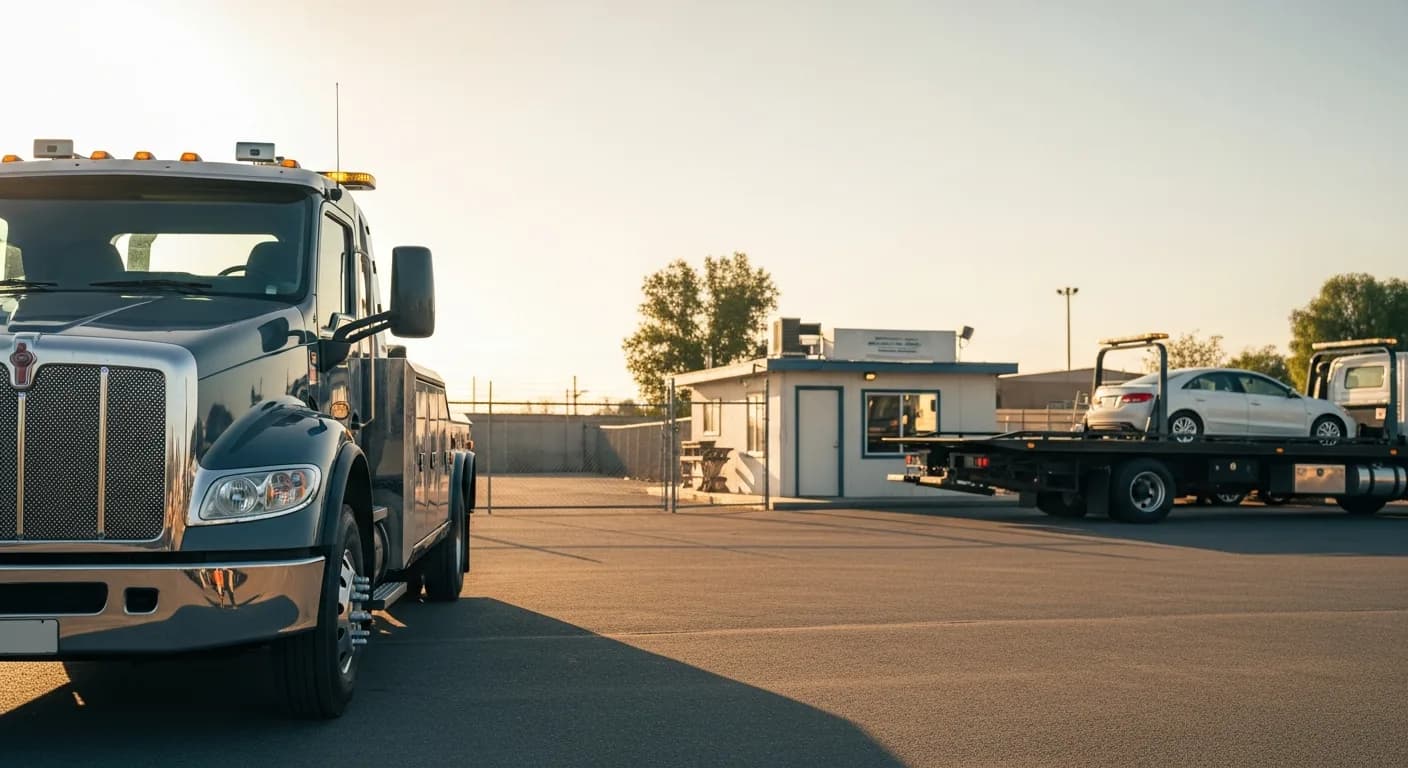
Your tow truck is your biggest expense and most important decision. New trucks cost $100,000 or more, while quality used trucks run $50,000 to $200,000 depending on age, condition, and capabilities.
Don't buy the cheapest truck you find. Breakdowns cost you money and reputation. A reliable truck that works every day is worth more than a bargain that sits in the shop.
Consider what types of towing you'll handle. Light-duty trucks handle cars and small vehicles. Medium-duty trucks can manage larger vehicles and equipment. Heavy-duty trucks are for commercial vehicles and specialty jobs.
Factor in financing costs. Monthly payments on a $100,000 loan over seven years run around $1,300. That's before insurance, fuel, maintenance, and other operating costs.
You'll also need chains, straps, dollies, safety equipment, and a dispatch system. Budget at least $10,000 for additional equipment and initial operating expenses.

Secure Proper Insurance
Insurance for towing companies is expensive but absolutely required. Most states require $1 million in liability coverage. Some cities have additional requirements like NYC's $25,000 "on hook" coverage for vehicles being towed.
You'll need commercial auto insurance, general liability, garage keeper's legal liability, and potentially premises insurance if you store vehicles. Philadelphia requires at least $100,000 in garage keeper's coverage.
Shop around aggressively. Insurance costs vary significantly between providers, and some specialize in towing companies. Get quotes from at least three companies before deciding.
Don't try to save money with minimal coverage. One serious accident can bankrupt your business if you're underinsured.
Build Your Operations Plan
Most towing companies charge a $75 to $125 base fee plus $2 to $4 per mile. The national average tow costs $109, and most jobs are local runs of 5 to 10 miles.
You need systems for dispatch, billing, customer communication, and vehicle storage. Invest in dispatch software that tracks jobs, manages driver schedules, and handles billing. Manual systems don't scale and create problems as you grow.
Plan your service area carefully. Wider coverage sounds good, but long drives to jobs eat into profits. Focus on areas you can reach quickly and serve efficiently.
Set realistic revenue targets. Aim for $10,000 monthly profit by the end of your first year, $15,000 by year two, and $25,000 by year three. Average sales per location hit $1.3 million, but that includes established companies with multiple trucks and contracts.
Budget for Operating Expenses
Monthly costs add up quickly. Fuel alone runs around $1,282 monthly if you're doing 220 calls with 20 miles average per call. That assumes diesel at $3.79 per gallon and 13 mpg fuel efficiency.
Budget at least $500 monthly for repairs and maintenance. Older trucks cost more to maintain, but even new trucks need regular service. Factor in tire replacement, brake work, hydraulic system maintenance, and unexpected breakdowns.
Marketing costs at least $500 monthly. You need website maintenance, Google Ads, business listings, and promotional materials. Don't skimp here. Customers who can't find you won't call you.
Driver wages average $20.25 per hour in 2024. If you're not driving yourself initially, budget around $44,198 annually for a full-time driver.

Plan for Long-Term Growth
Start with one truck and learn the business before expanding. Many new operators get excited and buy multiple trucks, then struggle to keep them busy and profitable.
Track your numbers obsessively. Know your cost per job, average revenue per customer, and profit margins. Transportation businesses average 30.59% gross margins and 5.91% net margins, though some towing companies achieve up to 33.65% profit.
Build relationships with police departments, auto shops, and property managers. Repeat business and contracts provide steady income that's more predictable than random roadside calls.
Consider specializing. Some companies focus on luxury vehicles, others on heavy commercial towing, and some build lockout and roadside assistance services. Specialization can command higher prices and reduce competition.
Related Guides
Create Your Business Plan
You'll need a business plan for loans, investors, and your own planning. Your plan should cover market analysis, competitive positioning, startup costs, operating projections, and growth strategy.
Include realistic financial projections showing monthly cash flow, break-even analysis, and profitability timelines. Banks want to see you understand the business's financial realities.
Don't guess at numbers. Use the market research and cost estimates you've gathered to build accurate projections. Overly optimistic plans hurt your credibility and set you up for disappointment.
Starting a towing company takes significant capital, proper planning, and patience to build profitability. But with the right preparation and realistic expectations, you can build a profitable business in a growing industry. Focus on getting the fundamentals right before worrying about expansion, and you'll be ahead of operators who rush into business unprepared.
If you need help putting together financial projections or a complete business plan for your towing company, PlanArmory's business plan generator can create professional documents that include market analysis, financial forecasting, and operational planning. It's designed specifically for entrepreneurs who need investor-ready plans without spending weeks on research and writing.