How to Start a Mobile Bar Business: Plan, Licenses & Costs
Skip the traditional brick-and-mortar overhead. Mobile bars bring cocktails to customers instead of waiting for customers to come to you.
The global mobile bartender services market reached $6.8 billion in 2024 and it's projected to hit $13.1 billion by 2033. That's 7.6% annual growth in an industry where you can start for under $5,000.
You don't need a storefront lease or expensive renovations. Just wheels, liquor, and the right licenses.
What Is a Mobile Bar Business?
You bring fully-equipped bar services to private events, weddings, corporate gatherings, and parties. You can operate as a bartender-for-hire (clients buy the alcohol) or provide full-service bars (you supply everything).
The bartender-for-hire model offers profit margins up to 88% since you're just providing service and equipment. Full-service operations where you supply alcohol typically see 20-40% margins but generate higher revenue per event.
Your setup can range from portable bars that fit in a car trunk to fully-equipped bar trucks or trailers. Start small and scale up based on demand.
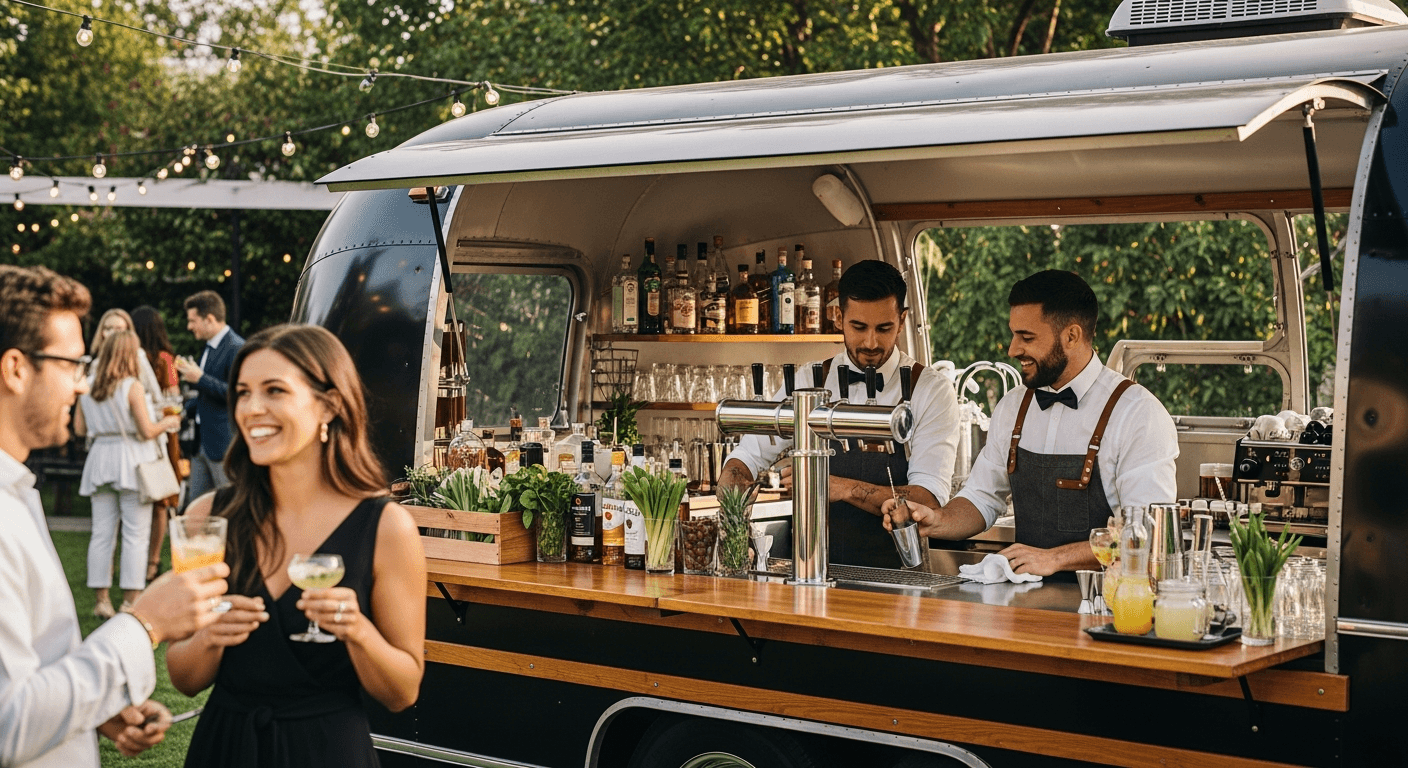
Mobile Bar Business Models
Bartender-for-hire: You bring equipment, glassware, and bartending expertise. Clients purchase their own alcohol. Lower startup costs, higher margins, but lower revenue per event.
Full-service mobile bar: You provide everything including alcohol inventory. Higher startup costs and lower margins, but wedding bar rentals start at $795 for 2 hours and can reach $1,500-$3,000 minimums for larger events.
Specialty services: Focus on craft cocktails, wine tastings, or themed bars. Premium pricing but requires specialized knowledge and equipment.
Pick your model based on your budget and local regulations. Some states make it easier to operate without selling alcohol directly.
Startup Costs Breakdown
Basic portable setup: $2,000-$5,000 covers LLC formation, insurance, permits, basic equipment, website, and branding.
Comprehensive operations: $14,200-$45,000 gets you professional-grade equipment, vehicle modifications, and extensive inventory.
Bar trucks and trailers: $20,000-$50,000 upfront, or $600-$1,500 monthly if financed at 5% interest.
Start with the portable option. You can always upgrade once you're generating steady revenue. Many successful mobile bars began with folding tables and upgraded to custom trailers later.

Licensing Requirements
This gets complicated fast. Requirements vary dramatically by state and even by city.
Business license: Standard requirement everywhere. Costs around $100-$500 annually.
Liquor license: The big one. Caterer's liquor licenses range from $300/year in Wyoming to over $15,000/year in California. Florida charges $1,820-$5,000 and takes 30-90 days to process.
Health department permits: Required since you're serving food/beverages. Expect $100-$1,000 annually.
Event permits: Some states require permits for each event. Texas charges $50 per day for temporary permits.
Total annual licensing costs typically run $1,000-$8,000 depending on your location and services offered.
Start by calling your state's alcoholic beverage control board. They'll tell you exactly which licenses you need. Don't guess on this part.
Essential Equipment List
Basic bar equipment: Shakers, strainers, jiggers, muddlers, bar spoons. Budget $200-$500.
Glassware: Buy plastic for outdoor events, glass for upscale indoor parties. Plan $300-$800.
Portable bar setup: Folding bars, ice bins, coolers. Basic setups cost $500-$1,500.
Transportation: Shelving, securing equipment, coolers that fit your vehicle. Budget $200-$1,000.
Point-of-sale system: Square or similar for credit card processing. Essential even for bartender-for-hire gigs.
Don't buy everything at once. Start with essentials and add equipment as you book more events. Your first few gigs will show you what you actually need versus what looks cool in catalogs.
Revenue and Profit Expectations
Average mobile bars generate $4,000-$22,000 monthly, with annual revenue ranging from $52,000-$260,000. Net profit margins typically fall between 20-40% for full-service operations.
A high-performing mobile bar can generate $124,000 EBITDA in the first year while paying the owner an $80,000 salary. Wedding bars for 100 guests cost $3,000-$5,000 according to current market data.
Your income depends on your model, location, and how many events you can handle. Event organizers pay around $50 per hour for bartending services, plus tips.
The catering industry is growing 6% annually, from $72.67 billion in 2023 to a projected $124.36 billion by 2032. Mobile bars ride this wave without needing a restaurant location.

Getting Your First Clients
Wedding venues: Partner with venues that don't have full bar service. Offer them a referral commission.
Event planners: They book multiple events monthly and need reliable vendors. Show up on time and they'll use you repeatedly.
Corporate events: Companies need bartenders for holiday parties, client events, and team building. Higher budgets than private parties.
Social media marketing: Post photos from events (with permission). Instagram and Facebook drive bookings for visual businesses like mobile bars.
Networking events: Attend local business networking groups. Chamber of Commerce meetings are full of people who host events.
Your business plan should map out exactly how you'll find customers in your area. Our business plan generator helps you identify target customers and marketing strategies specific to mobile bar services.
Monthly Operating Expenses
Budget for these recurring costs:
- Insurance: $200-$800 monthly
- Equipment leasing/financing: 3-10% of revenue
- Transportation costs: 3-7% of revenue
- Licenses and permits: 2-5% of revenue
- Staff wages: 10-25% of revenue for busy operations
A mobile bar generating $10,000 monthly might spend $2,000-$4,000 on operating expenses, leaving $6,000-$8,000 gross profit before taxes and owner salary.
Track these numbers from day one. Many mobile bar owners underestimate transportation costs and insurance requirements.
Common Mistakes to Avoid
Skipping insurance: One accident without proper coverage destroys your business. Budget $200-$800 monthly for comprehensive protection.
Ignoring local regulations: Every city has different rules about where you can serve alcohol. Research before accepting events.
Underpricing services: Calculate all costs including travel time, setup, breakdown, and equipment wear. Don't compete on price alone.
Buying too much equipment initially: Start lean and upgrade based on actual demand. Equipment financing eats into profits.
Not having contracts: Written agreements prevent disputes about services, timing, and payment terms.
Related Guides
Writing Your Business Plan
Mobile bars need solid financial projections to secure funding and plan growth. You'll need to forecast seasonal demand, calculate equipment ROI, and plan cash flow around event deposits.
Your plan should include competitor analysis of other mobile bars and fixed venues in your area, plus detailed marketing strategies for reaching event planners and private clients.
PlanArmory's business plan generator creates comprehensive plans for service businesses like mobile bars, including financial projections and market analysis tailored to your specific location and business model.