How to Start a Landscaping Business: Complete Guide & Business Plan
Starting a landscaping business isn't just about knowing which end of a shovel to hold. You're entering a massive industry that hit $153 billion in 2024 and employs over 1 million people across nearly 700,000 businesses. But here's the thing: most new landscapers focus on the wrong stuff first.
Skip the fancy logo and expensive equipment initially. You need customers, permits, and a real plan before anything else. This guide walks through exactly what matters when you're starting from zero.
Step 1: Choose Your Landscaping Niche
Don't try to be everything to everyone. The landscaping industry breaks down into clear segments, and maintenance generates the largest share at 45% of the market. Pick one area to start:
Lawn maintenance is the easiest entry point. Mowing, edging, and basic cleanup require minimal equipment and skills. You can start with a $500 push mower and build from there.
Landscape design and installation offers higher margins but demands more expertise and capital. Design-build installs are actually the fastest-growing segment with an 8.8% growth rate, but you'll need serious equipment and crew experience.
Specialized services like tree care, irrigation, or hardscaping let you charge premium rates. The trade-off? You need specific certifications and expensive tools.
Residential work accounts for 61% of the market and tends to be more relationship-driven. Commercial contracts offer steadier income but often require lower margins and more complex bidding processes.
Step 2: Get Required Licenses and Insurance
You can't just start cutting grass legally. Every state requires a commercial pesticide applicator license if you plan to use any chemicals. Beyond that, 16 states require specific landscaping licenses.
Check your state's requirements carefully. California needs a C-27 landscape contractors license for projects over $500. Nevada requires a state contractor license for work valued at $1,000 or more. North Carolina exempts landscaping work under $30,000, but don't assume your state does the same.
Business licenses cost anywhere from $25 to $550 depending on your location. Get general liability insurance immediately. One slip with a mower near someone's car and you're looking at thousands in damages.
You'll also need workers' compensation insurance once you hire employees. Labor makes up 30 to 50% of total revenue in this business, so plan for this cost early.
Step 3: Calculate Your Startup Costs
Most landscaping businesses start with $5,000 to $8,000, though larger operations can require $50,000 or more. Here's where that money goes:
Equipment costs vary wildly based on your niche. A basic push mower costs $120 to $500. Commercial riding mowers run $3,000 to $8,000. You'll also need trimmers, blowers, safety gear, and hand tools.
Vehicle and trailer costs hit hard. You need at least $30,000 to $40,000 for a basic pickup truck with towing capability. Commercial vehicles can push over $100,000.
Marketing costs shouldn't be ignored. A simple website runs $100 to $500, but plan on $200 to $2,000 monthly for online marketing once you're established.
Start lean. Buy used equipment when possible and focus on services that don't require massive upfront investment. You can always upgrade as revenue grows.
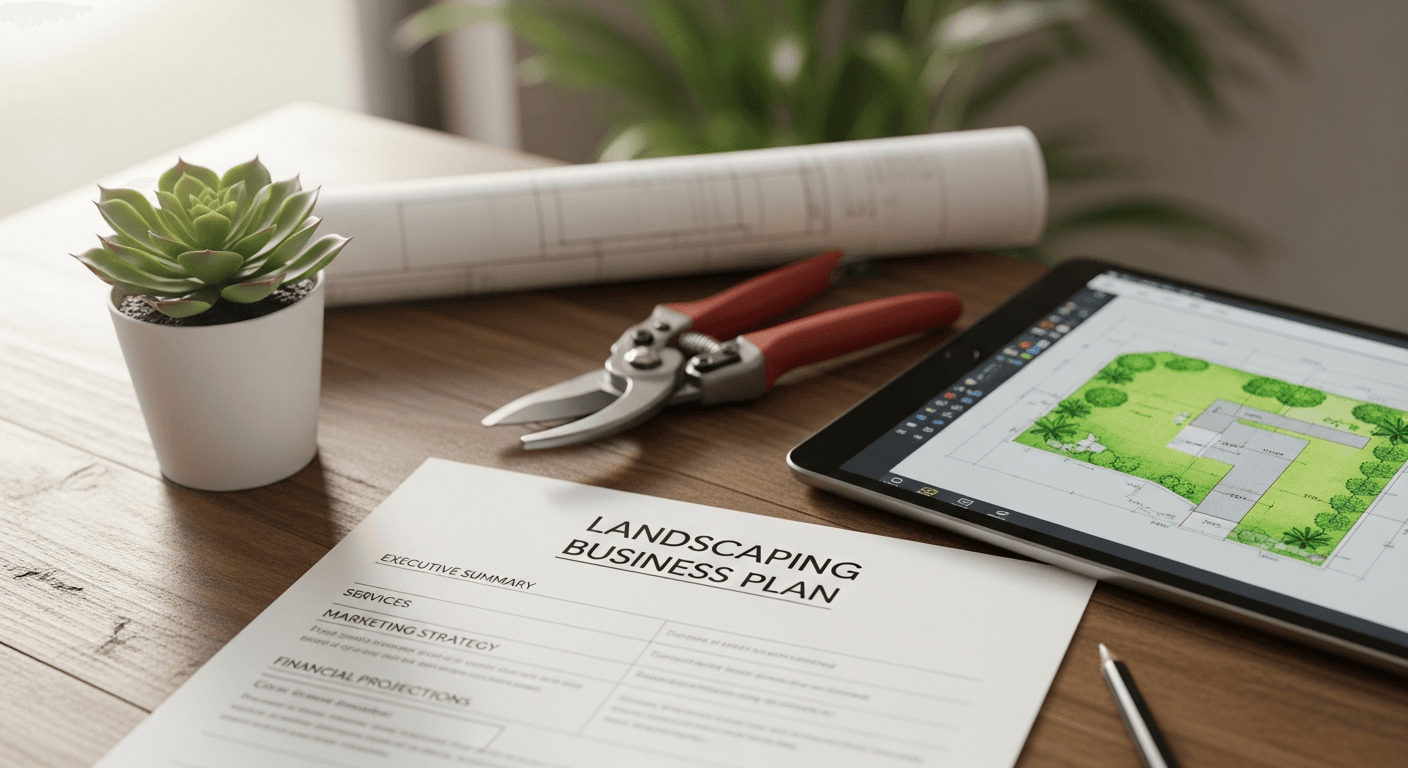
Step 4: Build Your Business Plan
You're not writing this for fun. Banks want to see real numbers before they'll loan you money. Customers want to know you're legitimate before they'll trust you with their property.
Your landscaping business plan needs these sections:
Market analysis should identify your local competition and target customers. Research what other landscapers charge in your area. Look up demographic data to understand how many potential customers live within your service radius.
Service offerings need to be specific. Don't just say "landscaping services." List exactly what you'll do, how often, and what it costs.
Financial projections matter more than you think. The industry maintains an 11.9% profit margin, but new businesses often see around 15% while growing services average 45%. Be realistic about your first-year numbers.
Operations plan should cover everything from equipment maintenance to employee scheduling. How many properties can you service per day? What happens when equipment breaks down?
Marketing strategy needs to be more than "word of mouth." How will you find your first 20 customers? Your first 100?
Step 5: Price Your Services for Profit
Pricing kills more landscaping businesses than bad weather. You're not just covering costs, you're building a profitable business that can grow.
Labor costs are rising roughly 20% through 2029, so factor that into long-term contracts. A typical landscaping company generates $14,682 per customer annually, but this varies dramatically by service type.
Gross margins around 85% are common for landscaping companies, but your net profit will be much lower after equipment, fuel, and overhead costs. Residential-focused businesses should target 15-20% net margins, while commercial vendors typically see 10-15%.
Price by value, not just time. A customer paying for weekly maintenance isn't just buying grass cutting. They're buying time, curb appeal, and peace of mind.
Step 6: Find and Keep Customers
Here's a brutal truth: 25% of landscaping companies have customer retention rates of 69% or less. Keeping customers matters more than finding new ones.
Start with friends, family, and neighbors. Ask for referrals from every satisfied customer. Put up yard signs with permission. Local Facebook groups and Nextdoor apps work better than expensive advertising for small landscapers.
Focus on customer service from day one. Show up when promised. Clean up after yourself. Communicate about any issues before they become problems.
The median landscaping company serves 355 customers, so you don't need thousands of clients to build a solid business. You need the right customers who pay on time and refer others.

Step 7: Plan for Growth
Most successful landscaping businesses don't stay one-person operations forever. The industry has grown 4.8% annually over the past five years, with 726,565 businesses operating in 2025.
Plan your growth carefully. Adding employees means workers' compensation insurance, payroll taxes, and management headaches. But it also means serving more customers and building a business that doesn't depend entirely on your physical labor.
Consider seasonal fluctuations in your business plan. How will you maintain cash flow during slow months? Some landscapers add snow removal or holiday lighting services to smooth out seasonal dips.
Think about equipment replacement costs. That $3,000 mower won't last forever, especially with commercial use. Set aside money for repairs and replacements.
Related Guides
Ready to Turn Your Landscaping Idea Into a Real Business?
Starting a landscaping business takes more than good intentions and a green thumb. You need a solid business plan that covers everything from startup costs to growth projections. PlanArmory's business plan generator helps you create a professional plan in minutes, not weeks. Answer a few questions about your landscaping business idea and get a complete plan that actually makes sense for your goals.