How to Start a Drone Photography Business: Plan, Gear & FAA Rules
Your phone buzzes with another property listing that needs aerial shots. You could charge $300 for two hours of work, but you don't have your Part 107 license yet. Frustrating, right?
Starting a drone photography business isn't as simple as buying a drone and hanging up a shingle. You'll need FAA certification, proper insurance, business registration, and the right equipment. Skip any of these steps and you'll either be grounded by regulations or hemorrhaging money on equipment failures.
The good news? The drone photography market is exploding. The industry is expanding from $870 million in 2025 to a projected $4.82 billion by 2035. That's room for plenty of new operators who do things right.
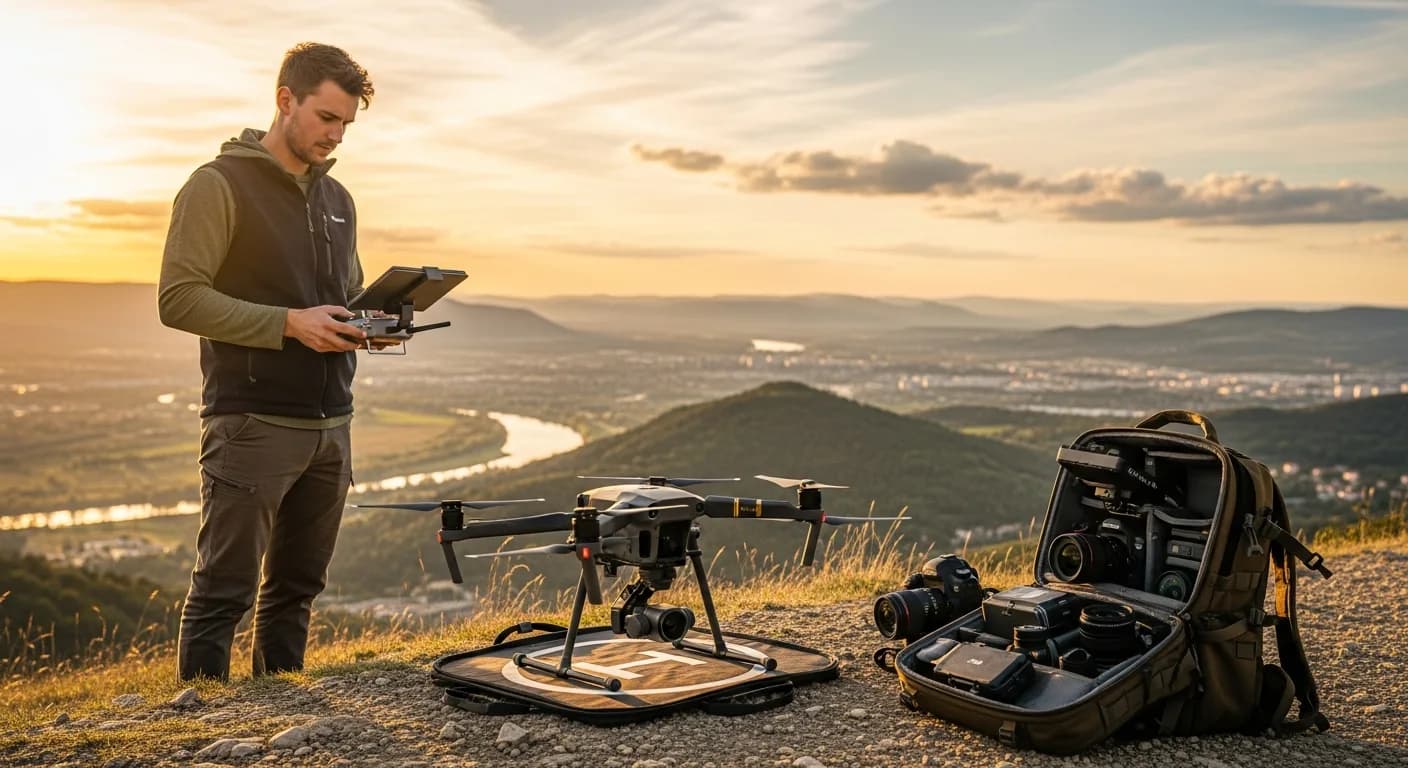
Get Your FAA Part 107 License First
Don't touch a single piece of marketing until you're legally certified to fly commercially. The FAA Part 107 Remote Pilot Certificate isn't optional for paid drone work. It's federal law.
You'll pay $175 for the knowledge test, which covers airspace regulations, weather patterns, and emergency procedures. Most people also invest in a prep course ($99 to $300) because the pass rate for unprepared test-takers is terrible. Budget 2-4 weeks of study time if you're starting from zero aviation knowledge.
Registration comes next. Each drone costs $5 to register and lasts three years. You'll get a unique registration number that must be visible on every aircraft you fly commercially.
Don't try to skip this step. The penalties for commercial drone operation without proper certification include fines up to $27,500 per violation. Not worth the risk when proper licensing costs under $500 total.
Choose Your Drone Equipment Wisely
Your equipment determines what services you can offer and how much you can charge. A basic consumer drone limits you to simple real estate photos. Professional equipment opens doors to construction surveys, wedding cinematography, and inspection work.
Entry-level professional setup starts around $3,000. You'll want a drone with a 1-inch sensor or larger (like the DJI Mavic 3 Pro at $2,199), spare batteries, ND filters, and a quality carrying case. This handles most real estate and event photography.
Serious commercial work requires more investment. Specialized surveying or inspection services need drones with thermal cameras, LiDAR sensors, or high-zoom capabilities. These setups run $15,000 to $30,000 but command premium pricing. Thermal inspection work bills at $100+ per hour versus $35-50 for basic photography.
Buy based on your target market, not features that sound cool. Real estate agents need sharp, properly exposed photos. They don't care about your drone's obstacle avoidance sensors.
Secure Business Insurance and Legal Structure
Commercial drone insurance isn't optional. Your homeowner's policy won't cover business operations, and client contracts will require proof of coverage.
Liability and hull insurance runs $500 to $3,000 annually depending on your coverage limits and service types. General liability protects against property damage or injuries caused by your operations. Hull insurance covers your equipment if it crashes.
Business structure matters too. Most drone photographers choose an LLC for liability protection and tax flexibility. Registration fees run $50 to $500 depending on your state. You'll also need a business license in most jurisdictions.
Get a dedicated business bank account and accounting system set up early. Mixing personal and business finances creates tax headaches and reduces your legal protections.
Plan Your Services and Pricing Strategy
Real estate photography pays $100 to $300 per shoot and offers steady volume. It's the easiest entry point because the requirements are straightforward and marketing is simple.
Wedding and event photography commands higher rates ($500 to $2,500 per day) but requires more skill and backup equipment. One equipment failure during a ceremony ruins your reputation permanently.
Commercial services like construction monitoring, agricultural surveys, or infrastructure inspection offer the highest margins. These clients pay $75 to $200 per hour because they need specialized expertise, not just pretty pictures.
Most successful operators start with real estate to build skills and cash flow, then expand into higher-margin specialties. Don't try to serve every market from day one. Pick one service, master it, then diversify.
The numbers work if you price correctly. Established operators earn $40,000 to $80,000 annually, with top performers exceeding $100,000. But that requires consistent marketing, professional service delivery, and smart pricing.
Create Your Business Plan and Growth Strategy
Your drone photography business needs a real business plan if you want financing or just clear direction. Most operators start with $10,000 to $30,000 in initial investment covering equipment, certification, insurance, and early marketing.
Map out your first year month by month. Factor in seasonal variations (real estate slows in winter, construction peaks in summer) and ramp-up time. Most new operators hit breakeven within six months if they price correctly and market consistently.
Project realistic revenue based on your target services. If you're shooting 20 real estate properties monthly at $250 each, that's $5,000 in monthly revenue. Subtract equipment costs, insurance, fuel, and time for editing to get your actual profit margins.
Don't forget about scaling challenges. You can only fly one drone at a time, so growth requires either higher rates or additional pilots. Plan how you'll expand beyond solo operations if you want significant income growth.
Financial projections become crucial when you need equipment loans or want to reinvest profits strategically. Banks want to see detailed cash flow forecasts and market analysis before approving business loans.
Related Guides
Ready to Take Off?
Starting a drone photography business combines technical skills, regulatory compliance, and solid business fundamentals. Get your Part 107 license, invest in quality equipment, secure proper insurance, and focus on one service category initially.
The market opportunity is real, but success requires treating this as a legitimate business, not a hobby that pays. Having a detailed business plan helps you avoid common pitfalls and scale systematically. PlanArmory's business plan generator can help you map out your drone photography business strategy, including financial projections and market analysis, in under an hour.