How to Start a Clothing Brand: Business Plan, Sourcing & Marketing
Starting a clothing brand isn't just about having a cool design idea. You need to understand production costs, find reliable suppliers, and build a marketing strategy that doesn't drain your budget before you sell your first piece.
Skip the planning phase and you'll face problems that kill most fashion startups: inventory sitting unsold, production costs that eat your profits, and marketing that reaches nobody. Here's what you actually need to know to launch a clothing brand that survives its first year.
Create Your Business Plan First
You can't wing a clothing brand. The numbers matter too much.
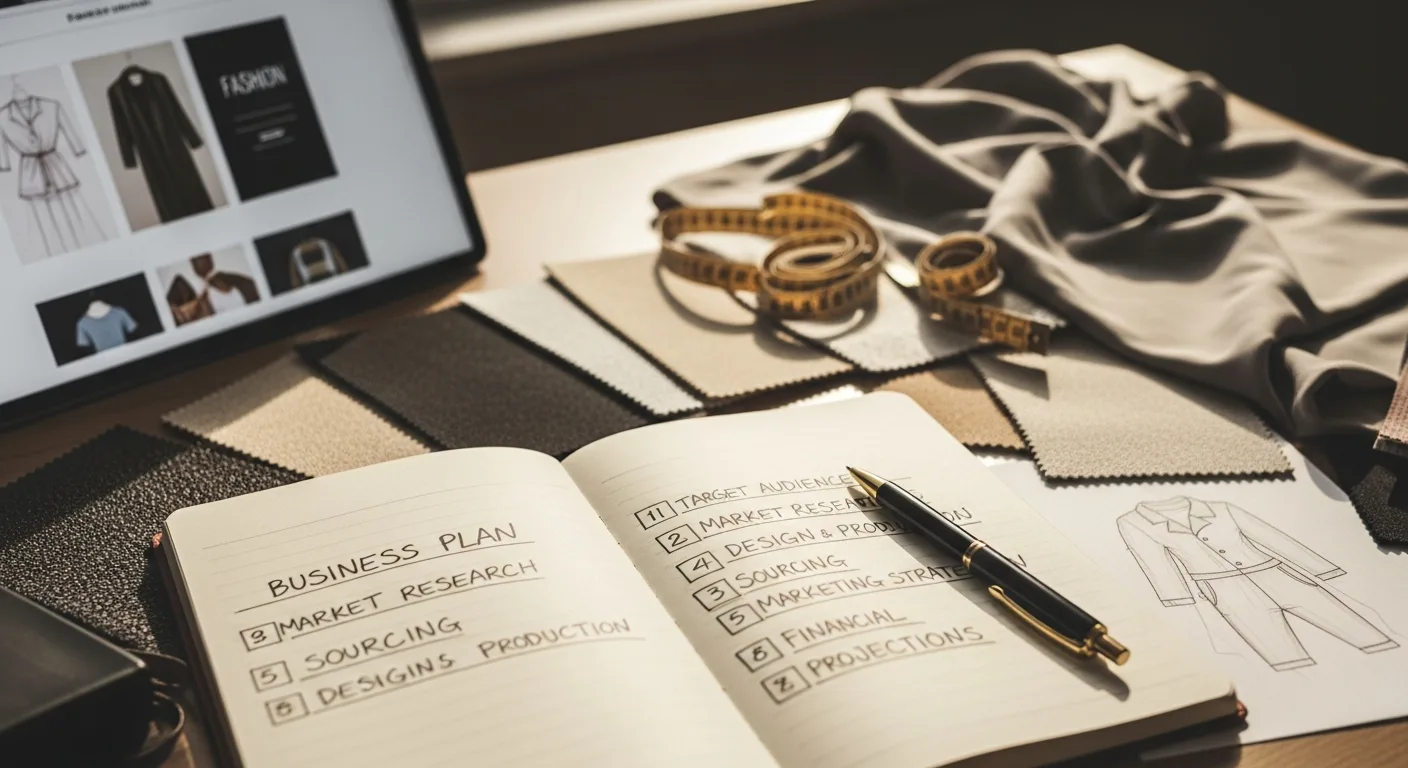
Start with your business model. Will you dropship, hold inventory, or manufacture custom pieces? Each option changes your startup costs dramatically. A basic online clothing line costs between $5,800 and $17,000 to launch, but that number depends on your approach.
Your business plan needs real financial projections. Factor in fabric costs ($2 to $10 per piece), cutting and sewing ($4 to $15 per piece), and minimum order quantities that many factories set at 50 pieces per style. Don't forget business licenses and permits, which average $800 to $1,500.
Most clothing businesses earn between 4% and 13% profit, so your pricing strategy can't be random. Calculate your cost per unit, add your desired markup (many brands use 2.5 to 3.0 times cost), and see if customers will actually pay that price.

Document everything in a formal business plan. You'll need it for loans, investor meetings, and keeping yourself accountable when decisions get tough.
Find and Vet Your Suppliers
Your supplier relationship makes or breaks your brand. Choose wrong and you'll deal with quality issues, late shipments, and orders that don't match your specifications.
Start by deciding between domestic and overseas manufacturing. Domestic suppliers cost more but offer better communication, faster shipping, and easier quality control. Overseas manufacturing reduces per-unit costs but adds complexity with international shipping ($0.50 to $5 per item) and longer lead times.
Research suppliers thoroughly. Request samples before committing to any order. Many factories now offer low minimum order quantities around 50 pieces, which helps new brands test products without massive upfront investment.
Get quotes from multiple suppliers for the same specifications. Production costs per garment range from $8 to $60 depending on style and quantity, so shopping around matters. Factor in quality inspection costs ($0.30 to $2 per piece) and shipping expenses ($200 to $1,000 or more).
Build relationships with 2-3 suppliers. Having backups prevents disasters when your primary supplier faces delays or quality problems.
Set Up Your Business Structure
Register your business properly from day one. You'll need a general business license and seller's permit at minimum. States like California, New York, and New Jersey require additional garment manufacturing registration.
Business registration costs between $50 and $500 depending on your location and entity type. Budget $400 to $1,000 total for registration and trademark fees if you're protecting your brand name.
Don't skip insurance. Fashion businesses face unique risks from product liability to inventory damage. General liability insurance runs about $6,000 annually, but it's cheaper than getting sued by a customer who claims your product caused harm.
Set up your finances correctly. Open a business bank account, choose accounting software, and establish relationships with suppliers who offer net payment terms. Cash flow kills more clothing brands than bad designs.
Develop Your Product Line
Start small. Launch with 3-5 core pieces instead of trying to create a full collection. This approach reduces your initial inventory investment (typically $1,000 to $10,000) and lets you test what customers actually want.
Focus on fit and quality over trendy designs. Customers forgive boring clothes that fit well, but they'll never reorder clothes that shrink, fade, or fall apart after washing.
Work with a professional designer if your budget allows ($500 to $2,000 per style). Good design pays for itself through better sales and fewer production problems. If you're designing yourself, invest time in learning about garment construction, sizing standards, and fabric properties.
Create detailed tech packs for your suppliers. Include measurements, materials, construction details, and quality requirements. Clear specifications prevent expensive mistakes and reduce sample rounds.
Build Your Brand and Marketing Strategy
Your brand identity matters more in fashion than most industries. Customers buy clothes to express themselves, so your brand needs personality that resonates with your target market.
Invest in professional branding and logo design ($200 to $1,500). Your visual identity appears on every piece of marketing, so cheap design costs you sales long-term. Good branding also helps justify higher prices.
Plan your marketing budget carefully. Many startups spend $5,000 to $10,000 on initial marketing, but throwing money at ads without strategy wastes cash. Start with organic social media, influencer partnerships, and content marketing before scaling paid advertising.
Build an email list from day one. Fashion is repeat purchase business, and email marketing costs less than constantly acquiring new customers through ads.
Consider your sales channels. Will you sell direct-to-consumer through your website, wholesale to retailers, or both? Each channel has different margin requirements and marketing needs.
Launch and Scale Smart
Don't blow your budget on launch week. Plan a soft launch to test operations, customer service, and fulfillment before investing in major marketing pushes.
Track your metrics obsessively. Monitor cost per acquisition, customer lifetime value, inventory turnover, and gross margins. Fashion brands that survive know their numbers.

Plan for seasonal demand. Fashion sales fluctuate throughout the year, so manage inventory and cash flow accordingly. Many brands struggle because they don't account for slow seasons.
Reinvest profits into inventory and marketing rather than expanding your product line too quickly. It's better to sell out of a few great products than to have slow-moving inventory across dozens of styles.
Related Guides
Get Your Business Plan Right
Starting a clothing brand requires more planning than most businesses. The global apparel market is worth $1.79 trillion, but competition is fierce and margins are thin.
A solid business plan keeps you focused on what matters: understanding your costs, finding reliable suppliers, and building a brand customers actually want to buy from. Skip the planning and you'll join the majority of fashion startups that fail within their first year.
Ready to create a professional business plan for your clothing brand? Our business plan generator helps you build investor-ready plans with accurate financial projections in minutes, not weeks.